When somebody reports a cockroach in a kitchen, the fridge or cooker often becomes the immediate suspect. These appliances create sheltered edges, and some produce warmth or moisture. Yet finding an insect near a fridge does not prove that it lives inside the machine. A sensible inspection follows the evidence around the appliance, the service routes behind it and the conditions that may support activity.
This distinction matters for safety. Moving a heavy fridge can damage the floor, strain a cable or expose a leaking connection. Opening an appliance casing is not a pest-control shortcut. The practical task for a Greenford occupier is to note where activity appears, clean what is accessible and ask for a targeted assessment of hidden space. The site's cockroach-control service describes checks around appliances, pipework and cupboard edges.
Warmth is only part of the attraction
Some cockroach species favour warm indoor shelter, so a motor, compressor or nearby pipe can make an area worth investigating. But warmth alone does not establish a harbourage. The space behind an appliance may also offer darkness, a narrow gap and little disturbance. Crumbs and grease can collect where ordinary cleaning does not reach, while a leaking pipe can supply moisture. Several conditions may overlap in a small area.
If activity is seen beside the fridge, record the exact edge and time. Does an insect emerge when the kitchen lights go on? Are there marks behind a removable kickboard or beneath the adjacent sink? A sequence of observations is more informative than saying the fridge is "infested". The BPCA's cockroach advice explains behaviour and identification; use it to frame questions for a professional rather than to select a product by guesswork.
The difficult strip behind a fridge

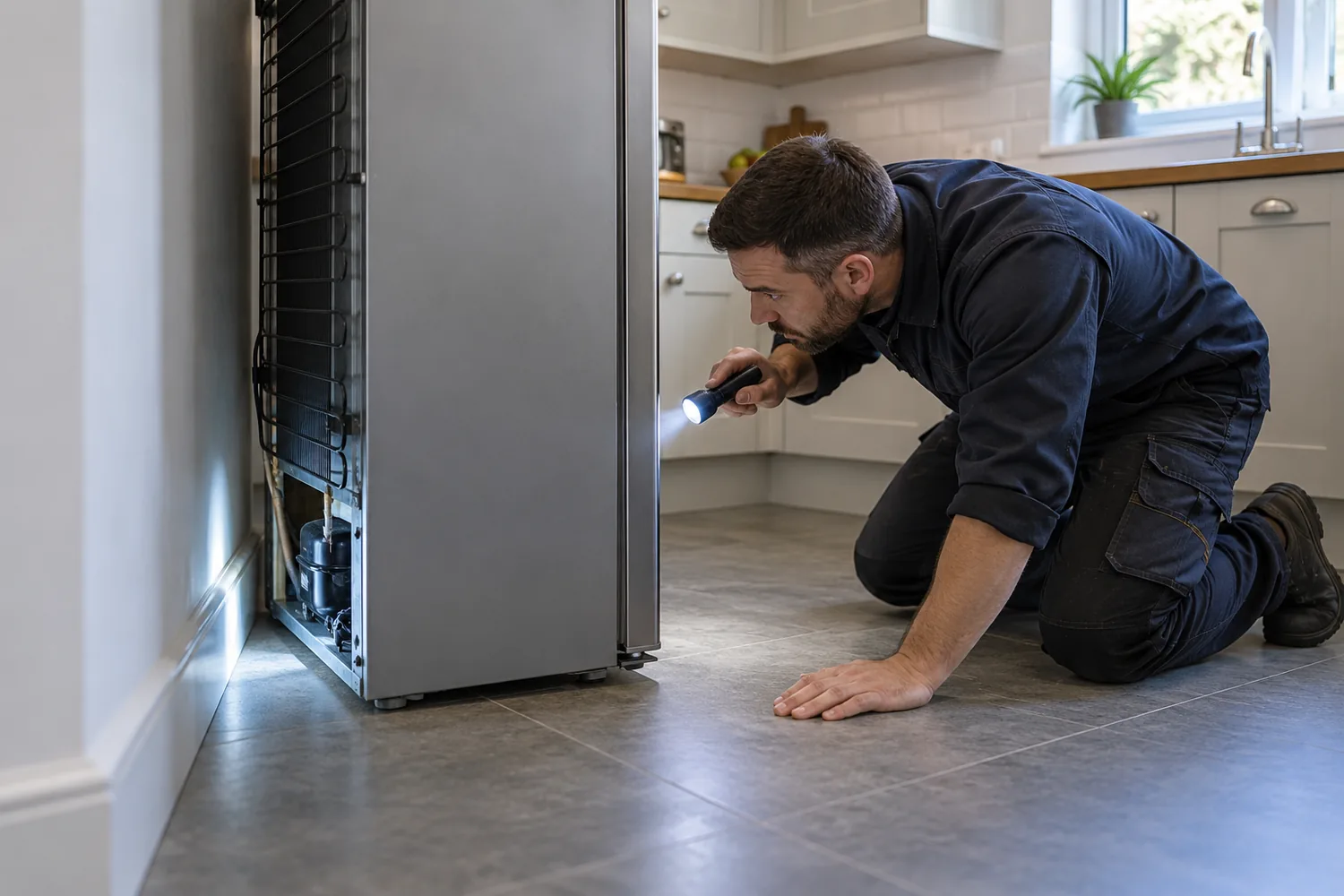
The back of a fridge can collect dust, crumbs and condensation, but it may be hard to inspect safely. Look from the side with a torch if the gap is accessible. Do not push a hand into moving or electrical parts. If the appliance can be moved easily and the manufacturer permits it, follow normal handling guidance; otherwise ask for help. A pest technician may coordinate with a responsible maintenance person if safe access requires a heavy unit to be moved.
Photograph any visible spotting or live insect with the surrounding appliance and wall in view. A close image without context is harder to act on. Note whether the area borders a service pipe or shared wall. If a leak is present, arrange repair through the relevant person. Moisture management can support control, but it is a separate maintenance job from pest treatment.
Cookers and dishwashers have different risks
A cooker area may combine food residue, warmth and narrow side gaps. A dishwasher adds water and drainage connections. These are reasons to inspect accessible edges, not to pull either machine apart. Avoid spraying behind a cooker, particularly where electrical or gas connections may be present. Do not remove fixed panels or disconnect an appliance to look for insects.
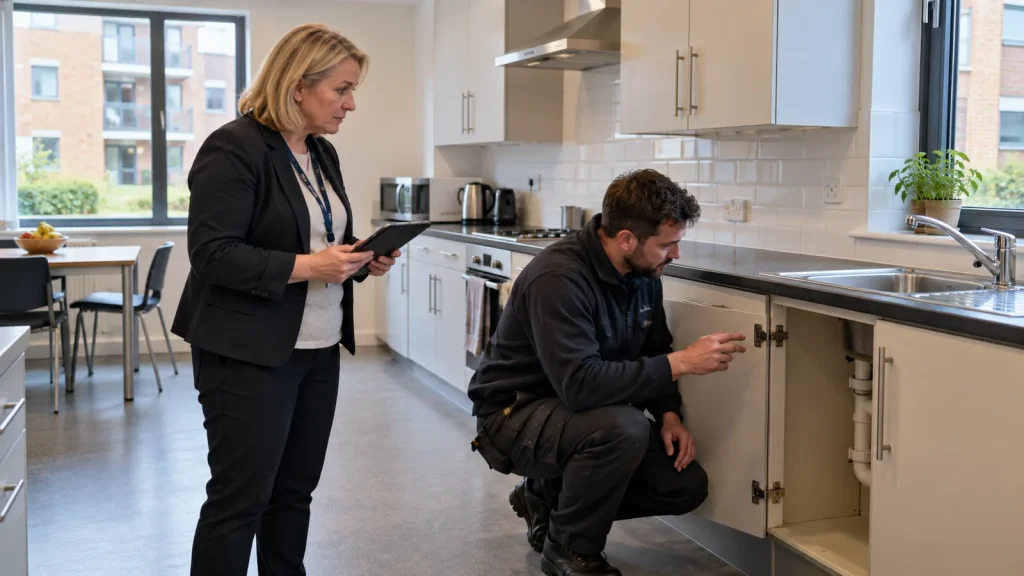
Check the surfaces you can reach: floor edges, a loose crumb tray if designed for routine removal, and adjacent cupboard bases. Clean food residue according to the appliance guidance. Tell the technician which appliances are built in, what can be moved and whether any trade must attend. The site's About page says access limits should be discussed rather than assuming hidden voids have been inspected.
A cabinet can be the real route
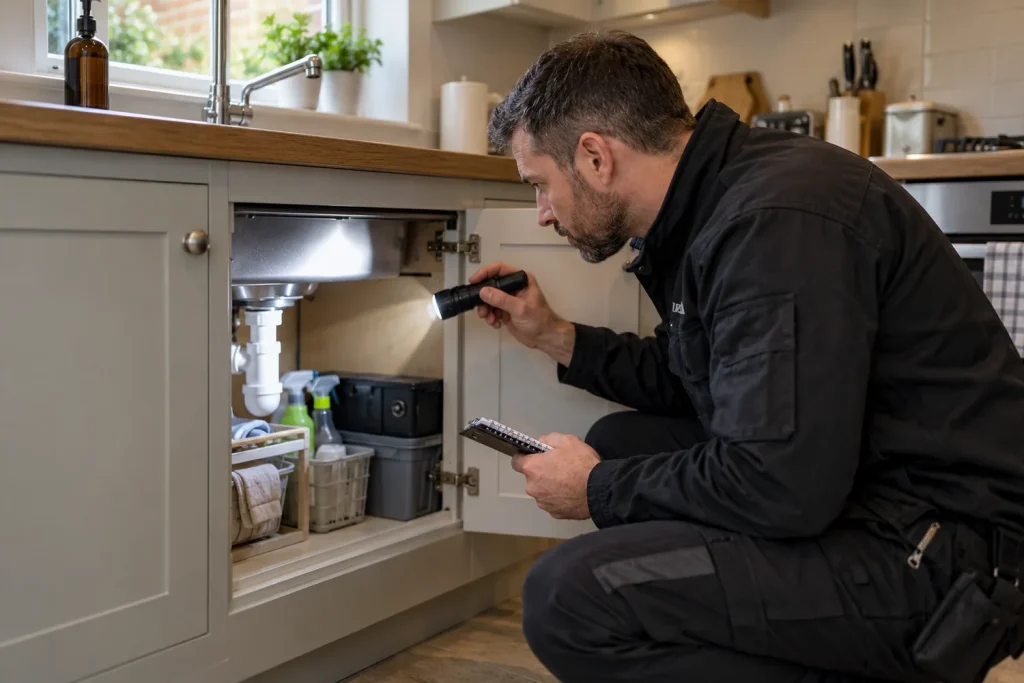
The insect may appear beside an appliance because a pipe or cable enters the wall nearby. Under-sink cupboards and service boxing can connect spaces that are not obvious from the floor. A technician may need to compare signs on both sides of a cabinet, along skirting and at the back of a unit. Do not seal an opening before the route is understood; it might conceal evidence or redirect activity.
In a flat or shared commercial building, service risers can connect several rooms or units. A sighting by one machine does not prove another occupier caused the problem. Give the building manager the location and dates if shared access may be relevant. Coordinated inspection can be more effective than separate, unconnected treatment of each kitchen.
What signs are worth recording?
Live insects provide strong evidence, especially if they can be photographed clearly. Dark spotting, cast skins or egg cases may also matter, but ordinary kitchen dirt can resemble some of these from a distance. Record where you found the material and avoid claiming a species from one mark. If an insect is safely contained, the assessor may be able to identify it; do not handle it with bare hands or transport it through the building unnecessarily.
Keep a simple log for a week or until the appointment: date, time, appliance or cupboard, and what was actually seen. Include whether a room was in use and whether cleaning or maintenance changed the area. This is particularly helpful if an insect disappears before anyone else sees it. The contact page asks for signs and affected rooms; a short log supplies exactly that.
Why blanket spraying is a poor appliance plan

A spray on the open floor may not reach a sheltered harbourage. It could also contaminate a food-preparation surface or interfere with a targeted professional method. Products have specific authorised uses and restrictions; an appliance cavity is not a general-purpose application area. Tell the technician about any product already used so it can be considered in the assessment.
The HSE biocide guidance recommends considering alternatives and following the label of any suitable product. Professional-only products should not be used by householders. A response around electrical equipment, gas or food requires site-specific care. The safer first actions are observation, accessible cleaning, food protection and repair of a leak by the appropriate person.
A manageable evening routine
Until the inspection, clear spills and food residue that you can reach, close open food containers and use a bin with a sound lid. Dry standing water from worktops and report persistent leaks. Do not dismantle every appliance in one night. The aim is to reduce easy resources and retain useful evidence, not to make the kitchen temporarily unusable.
If children or pets use the kitchen, keep them away from the area where activity or products have been found. If the sighting was in a food business, follow the site's food-safety procedure and ensure the responsible manager knows. A shared cleaning log can show what was done without implying that housekeeping alone explains the infestation.
After a repair, keep the inspection record
If a plumber repairs a leak or a maintenance worker adjusts an appliance, record the date and location. A later sighting can then be compared with the changed conditions. Do not assume that fixing moisture immediately removes insects already sheltered nearby. Equally, a quiet spell after a repair does not show that every access route has been closed. Review the technician's findings and any monitoring results before deciding that the issue has ended.
When the pattern extends beyond one machine
More than one sighting, activity in adjoining rooms or evidence along a service route calls for a wider inspection. The technician may need to check plumbing, storage and shared spaces. If the insect instead appears in a damp bathroom and has the characteristic silver body and tail filaments, ask whether it could be a silverfish; the silverfish service concerns a different pest and response. Good identification prevents the wrong area being treated.
An appliance is a useful landmark, not a diagnosis. By recording precisely where the insect appears, keeping food and water access under control, and arranging safe access behind the relevant equipment, you give the assessor a much better chance of finding the actual shelter and route. The Greenford cockroach assessment can then connect those observations with a suitable plan.
Need help with a pest concern in Greenford?
Describe the signs you have noticed and where you found them. The team can discuss a suitable next step for your property.
Contact the team