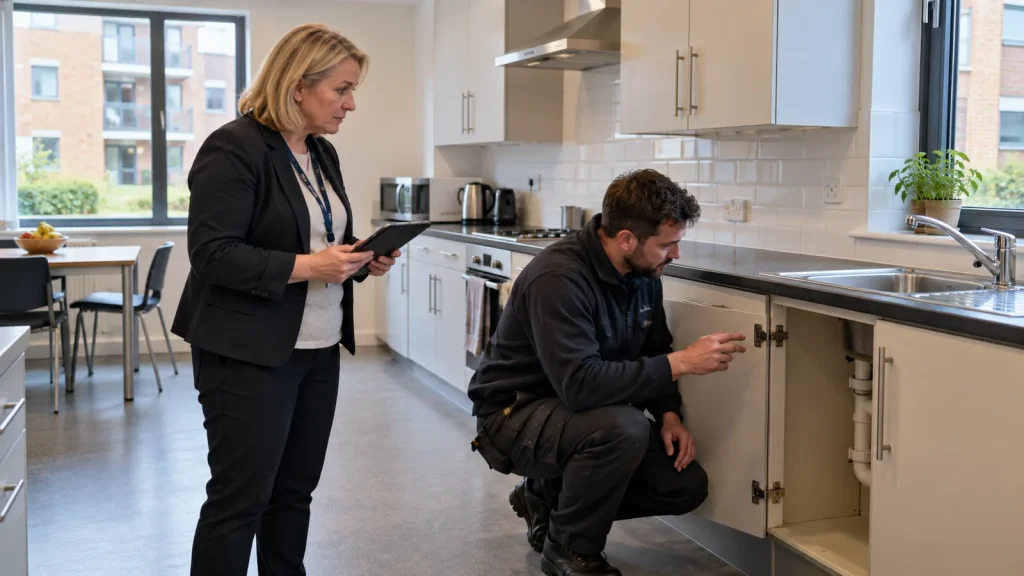

Cleaning is often recommended after a cockroach sighting, but "keep the kitchen clean" is too vague to be useful. A workable response asks where food and water remain available after normal use of the room. It also recognises that a tidy kitchen can still contain a hidden harbourage or a route through a service void. Reducing resources supports inspection and treatment; it is not a diagnosis or a promise that housekeeping alone will remove an infestation.
This article offers an evening and weekly routine that fits an ordinary Greenford household. It avoids dismantling appliances or applying products. If insects are repeatedly seen, the site's cockroach treatment service can assess identification, shelter and suitable control.
Begin with what is left out overnight
After the last meal, look at the surfaces and floor where food was prepared. Are crumbs trapped beneath a toaster, food residue left on plates, or a bin lid unable to close? Put open food away, clear accessible spills and empty waste into a sound lidded container. This is a short routine, not a deep clean of every cupboard each night.
If several people share the kitchen, agree who closes food containers and who checks the bin. A habit that depends on one person remembering everything is fragile. Keep cleaning products appropriate for the surfaces used and avoid mixing them. If evidence such as an insect or suspected egg case appears, photograph its location before ordinary cleaning removes it.
Check dry goods and packaging
Opened flour, cereal, rice and pet food can remain accessible if packets are loosely folded. Prioritise these items for sound containers or properly closed storage. Check the shelf behind them for residue and signs of activity. Do not assume every torn packet has been damaged in the home; note when it was bought and whether nearby items have similar marks.
If food is visibly contaminated, do not use it. Dispose of it securely and clean the affected area with suitable hygiene precautions. Keep children and pets away while doing so. A photograph can help the technician understand where damage occurred. If there is extensive evidence in a store cupboard, ask for advice before moving all the contents through the property.
Water may be less obvious than a bowl
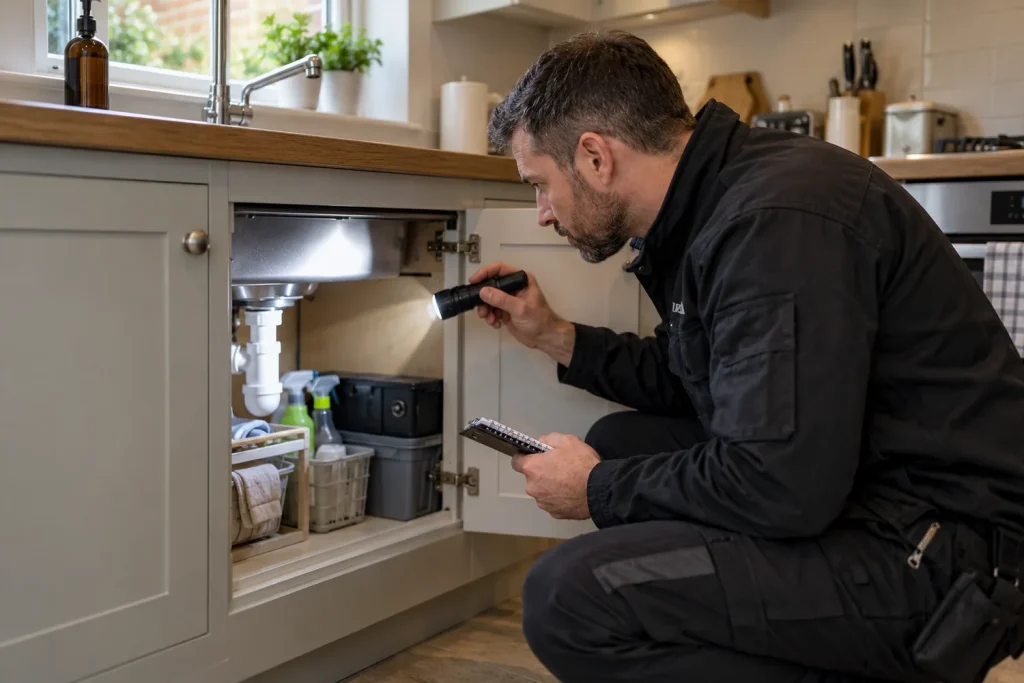
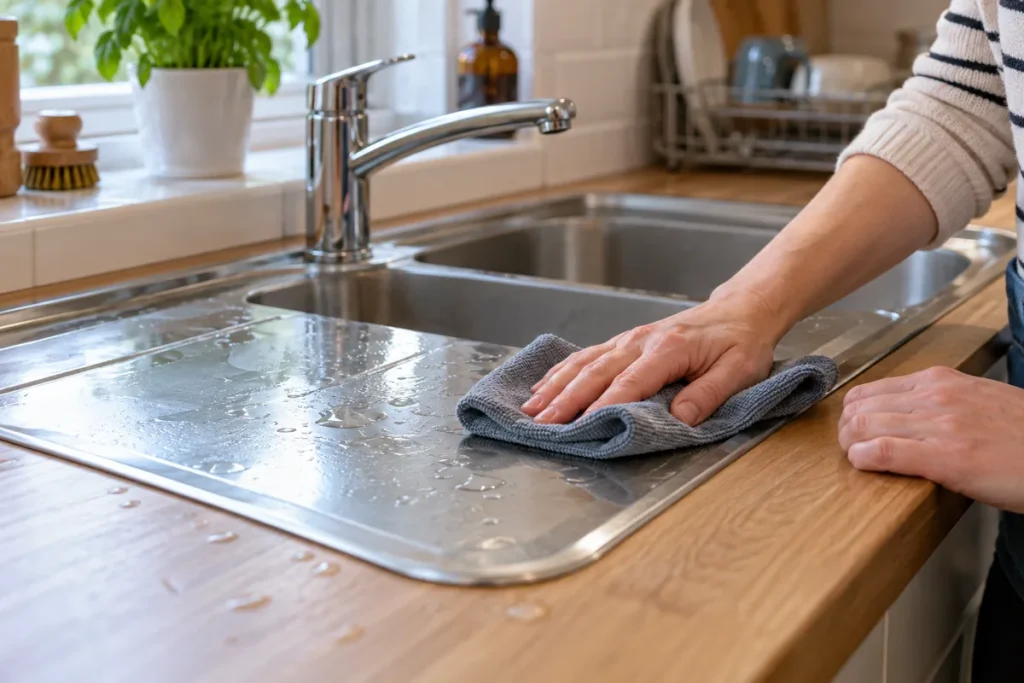
Standing water in a sink or on a worktop is visible, but small leaks and condensation can be missed. Check accessible under-sink pipes, the base of a dishwasher and the floor near a fridge. A damp patch needs a maintenance response whether or not a cockroach has been confirmed. Dry what you can reach, report a leak and keep a dated note of when it was repaired.
Do not remove appliance panels or put a hand near electrical parts to inspect moisture. A plumber or maintenance person may be needed for safe access. The site's About page explains why an inspection should note inaccessible areas rather than assume they are clear. A professional can relate the damp area to other signs and decide whether it is relevant to the pest problem.
Make bin management realistic
A kitchen bin with a lid that rests open or a liner that tears can leave food exposed. Choose a container that closes, wipe spills around it and follow the normal waste collection schedule. If outdoor or communal bins overflow, tell the person responsible. There may be a collection or storage problem that one flat cannot fix alone. Record the condition without claiming it is the source of an insect seen indoors.
In a business, waste handling belongs within the premises' food-safety system. Staff need a clear routine for closing bins, cleaning spills and reporting a pest sighting. A manager should know when and where the insect was seen so food handling and access can be managed promptly. Do not rely on a casual message that may never reach the person responsible.
Clean the edges you can reach
The open worktop is usually easy to wipe. The difficult places are cabinet bases, skirting edges and gaps beside appliances. Use a torch to identify accessible crumbs or grease. Clean them without pulling out heavy or connected equipment. If you see live insects or spotting, photograph the area and leave a note of what you cleaned. This helps an assessor compare later activity with the original condition.
There is no value in unsafe perfection. Moving a cooker or fridge without help can damage a connection or cause injury. Ask what access is needed for an inspection and who can provide it. The BPCA cockroach guide explains why sheltered areas matter; it does not mean every appliance should be dismantled by a householder.
A weekly check catches changes

Choose one day to inspect the same few points: beneath the sink, around the bin, beside the fridge and at the back of an accessible food cupboard. Note any live insect, egg-case-like object, spotting or new leak. A consistent five-minute check is more informative than one exhausting search. If no signs appear, record that too, but do not treat it as proof that a hidden problem has ended.
If you share the home, use one place for dated observations and photos. Avoid sending a new alarm each time someone finds an unfamiliar speck; compare it with the earlier evidence. The contact page asks for signs, rooms and access restrictions. A short, specific log makes a useful enquiry possible.
Do not substitute cleaning for identification
Food and water reduction is sensible, but the insect still needs to be identified. A small dark insect in a pantry might be associated with stored food rather than a cockroach. One jumping near pet bedding may suggest fleas; the site's flea treatment information addresses that different setting. A silver, fast-moving insect in a damp bathroom may fit silverfish control better. Photograph what you see and let the evidence decide.
If cockroaches are confirmed, treatment may involve monitoring, targeted work and repairs beyond cleaning. Ask which conditions can be changed by the occupier and which require a landlord or maintenance contact. A clear division of tasks prevents the same advice being repeated while a leak or service gap remains unresolved.
Avoid unplanned chemical use
Spraying food-preparation areas or applying powder behind appliances without a site assessment can create exposure and may fail to reach the shelter. Tell a technician about anything already used. The HSE's biocide guidance says to consider non-chemical options and follow the label for any suitable product. Professional-only products are not intended for household use. Food protection and routine cleaning are actions you can discuss immediately while a targeted plan is developed.
Use the routine to measure progress
Once treatment or repairs have taken place, keep the same evening and weekly checks for the agreed review period. Compare sightings at the original locations, note monitor findings if the technician asks you to, and record when a leak or bin issue was fixed. A change in pattern can be more useful than the count on a single day. Do not move monitors or clean treated areas contrary to specific aftercare instructions.
Reducing food and water access is a set of small, repeatable actions. Close food, clear accessible residue, use sound bins, repair leaks and record fresh signs. Those steps make the room less favourable and give an assessor clearer evidence. The professional decision then addresses the insect and route actually found in the building.
Keep the routine proportionate
If no cockroach has been identified, there is no need to turn ordinary kitchen care into an exhausting daily inspection. Start with the accessible points nearest the sighting and adjust only when evidence supports a wider search. If a technician finds a harbourage, ask which of your habits are genuinely relevant to that location. This keeps the work focused and makes it more likely that the useful changes will continue after the immediate worry has passed.
Need help with a pest concern in Greenford?
Describe the signs you have noticed and where you found them. The team can discuss a suitable next step for your property.
Contact the team