
Bed Bug Treatment Greenford
Bed bugs can hide beyond the mattress. We inspect sleeping and resting areas, establish the accessible extent and explain the preparation and treatment options. The plan includes what to leave undisturbed and how continuing signs will be reviewed.
Call +44 20 3966 2380 Compare the assessed heat option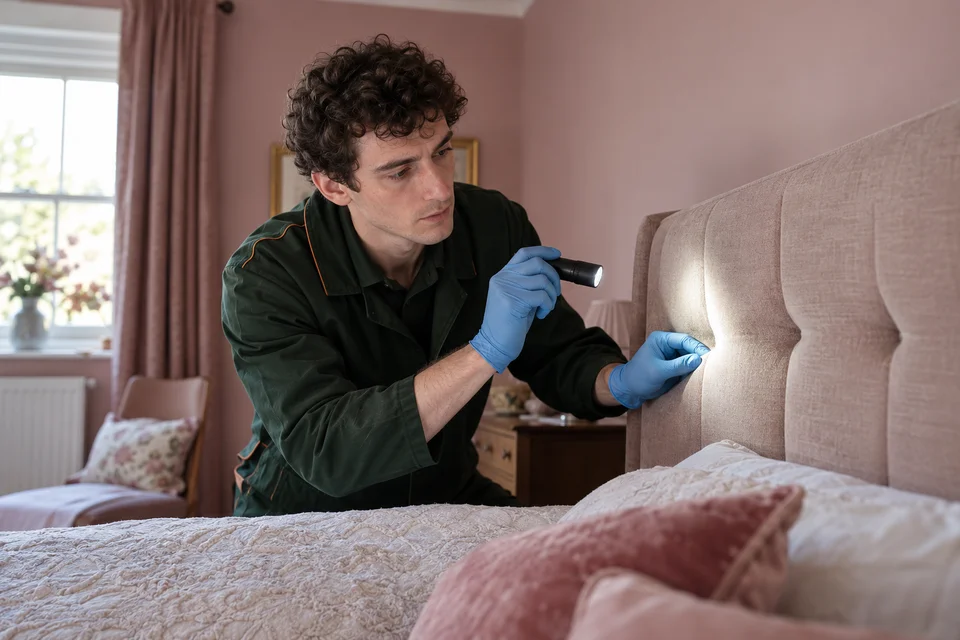
Inspect the sleeping area
- Examine mattress seams and frame joints
- Look behind accessible headboard edges
- Compare insects, cast skins and spotting
- Ask about sofas and adjoining bedrooms
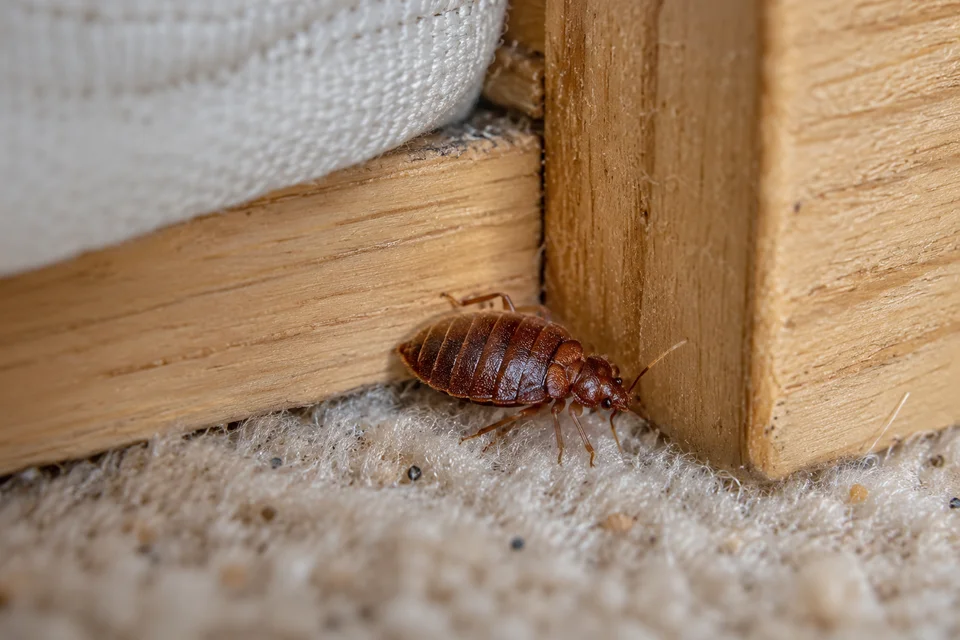

Treat the hiding places
- Match methods to confirmed bed bug evidence
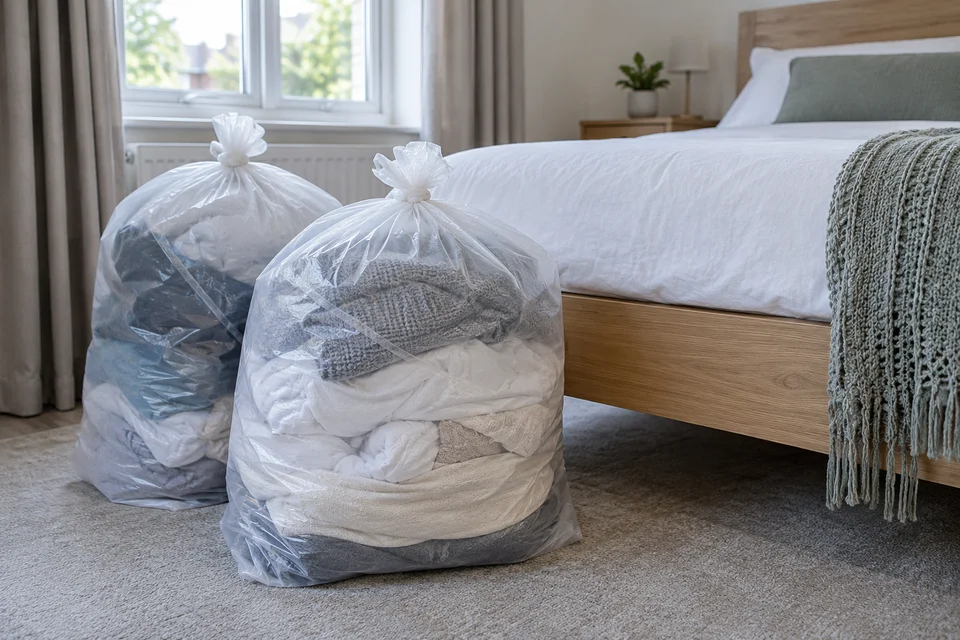
- Plan bagging before textiles are moved
- Explain treatment access and re-entry rules
- Review activity beyond bite reports alone
Find evidence before deciding on treatment
Explain which rooms are used for sleeping, when the concern began and whether a live insect has been found. Bites or itching are not a sufficient pest identification on their own. A clear insect photograph can help, but the inspection also checks the surroundings. Tell us about recent travel, second-hand furniture and products already applied without assuming that any one of them must be the source.
Accessible mattress seams, frame joints, the headboard and nearby furniture receive close attention. The technician looks for live insects, eggs, cast skins and characteristic spotting in context. Bed bases with drawers, upholstered seams and fixings can create sheltered areas that a quick look at the sheets misses. Heavy or attached parts are moved only when safe and within the agreed access.
If the signs do not confirm bed bugs, monitoring or further identification may be the next step. Applying insecticide merely because a room is suspected can complicate the assessment. Where the evidence suggests another biting insect, our flea inspection and environmental treatment may be the relevant route instead.

How the affected area is established
The proposed scope should reflect all places where people rest and where signs are found. A sofa used for sleeping, an adjacent bedroom or furniture moved between rooms can be relevant. The technician discusses these connections rather than automatically limiting attention to the first bed where an insect was seen.
We ask which areas can be inspected and what remains inaccessible. Furniture fixed to a wall or a densely stored bed base may limit the survey. Those restrictions should be explained before a treatment is agreed. In shared accommodation, permissions and information from other occupiers may be needed to understand whether the activity is confined to one room.
The inspection also records earlier treatment and subsequent movement of belongings. Repeated spraying of the visible bed does not resolve every concealed harbourage. A useful plan connects the evidence, rooms and contents with the proposed method and makes clear what further access or preparation is necessary.
| Evidence or history | Area to examine | Planning question |
|---|---|---|
| Insects at a headboard fixing | Frame, wall junction and nearby furniture | Can the fixing be reached safely? |
| Spotting on a sofa bed | Upholstery, mechanisms and sleeping use | Does the sofa need to be within scope? |
| Belongings moved to another room | Destination and handling route | Is a connected inspection needed? |
| Bites without insect evidence | Sleeping area and monitoring points | Can the pest be confirmed before treatment? |
Decide what happens to each group of items
Preparation is agreed for the treatment actually proposed.
Avoid stripping and carrying loose bedding through the home before you have instructions. Bagging at the point of collection can contain suspect textiles while their next step is arranged. Clean and untreated items should remain distinguishable so they are not mixed together during room preparation.
Laundering or drying instructions must account for the care label and the method required.
A valuable wool item, electrical blanket or delicate furnishing may need a different route from ordinary bed linen. Do not assume every item can be hot washed, frozen or exposed to steam. Tell the technician about belongings that cannot be moved or processed as requested.
Clear enough space to reach the agreed bed and furniture edges.
Decluttering means making treatment possible, not transferring a pile of potentially affected items into an unaffected bedroom. If mobility, storage or caring responsibilities make preparation difficult, raise that before the visit. The scope can then be discussed realistically rather than discovering inaccessible areas when treatment is due to start.
Furniture disposal should be a considered decision.
Replacing a mattress before the room and other hiding places have been assessed may leave the problem in place. If disposal is necessary, containment, movement and the timing of replacement need planning. Do not move suspect furniture into communal hallways or another room without advice.
Treatment follows identification and access
A suitable programme may combine physical removal, steam on appropriate accessible details and targeted insecticidal treatment. The choice depends on the survey, materials, available access and previous work. Steam is a local treatment method; it is not the same as heating an entire room. The assessed bed bug heat treatment option has its own equipment and preparation requirements.
Where a product is used, its authorised application and safety directions govern the work. The technician explains the surfaces or harbourages being treated and any items that must be removed or protected. Clothing, bedding and skin are not places to improvise applications of a premises insecticide. Mention children, pregnancy, respiratory concerns, pets and aquariums so the assessment can account for the people using the home.
Before leaving, you need clear instructions about access, ventilation and cleaning. These depend on the actual method and product used in your property. Ask which surfaces can be cleaned immediately and which treated areas must remain undisturbed. If an instruction is impractical, discuss it before work rather than quietly changing the preparation afterwards.
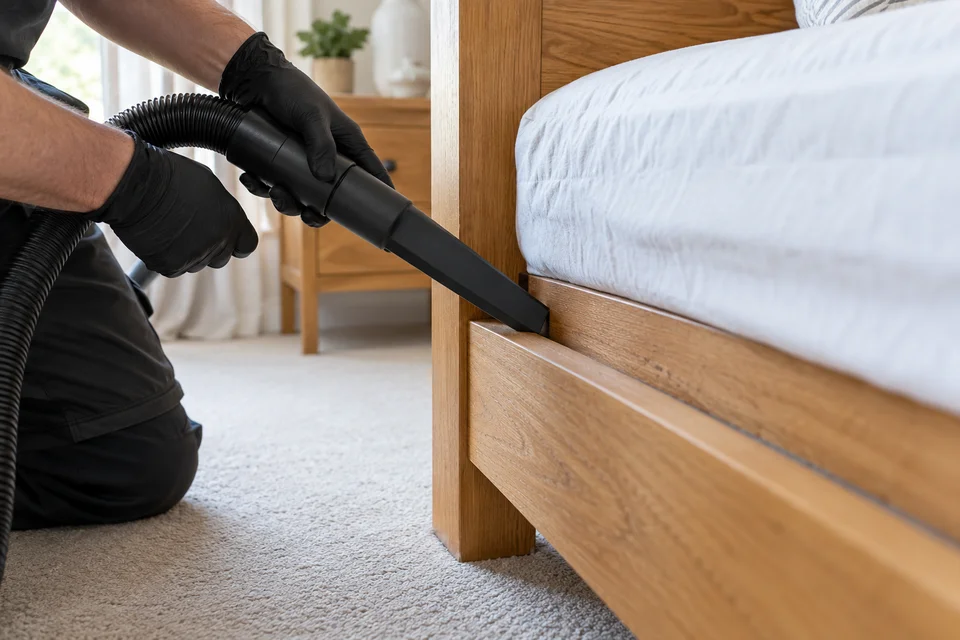
Record useful signs, keep the plan intact
Follow the specific re-entry instructions and keep the agreed room arrangements in place. Avoid adding shop-bought sprays, foggers or other products over treatment points. Mixing approaches can interfere with the planned work and makes it harder to understand why activity continues. Tell the technician if any additional product has already been used.
Keep a dated record of live insect sightings, their exact position and any photographs. Bite reports are useful background but cannot alone measure treatment success. Different people react differently and a new skin mark does not establish where or when an insect was present. Pest follow-up should therefore consider physical signs as well.
An agreed review checks accessible hiding places, any monitors and the preparation completed. Continuing activity may relate to missed access, emerging stages, connected rooms or reintroduction. The next step should follow that assessment rather than an automatic promise of either instant clearance or endless repeat spraying.
| Item to record | Useful detail | Why it helps |
|---|---|---|
| Live insect | Date, room, exact location and photograph | Supports identification and comparison |
| Changed room use | Where people now sleep or rest | Changes the locations needing review |
| Cleaning or additional product | Area and date | Explains changes to treated surfaces |
| Preparation not completed | Specific furniture or bagged items | Identifies a limit in the agreed coverage |
What affects a bed bug treatment price
The rooms and furniture involved, extent of evidence, preparation, access and chosen methods all affect the quotation. Ask how return visits are arranged, what they cover and whether further work would cost extra. A low headline figure is not useful unless it explains which areas and attendances are included.
The proposed work and price are agreed before treatment is booked. For a prompt enquiry, describe the sleeping areas, confirmed signs and any recent spreading of activity. Call with your Greenford postcode to discuss an inspection and available visit options. The enquiry confirms available attendance and how any review would be arranged.
Bed Bug Treatment: your questions
Can treatment be booked from a photograph of bites?
A skin photograph cannot reliably identify the pest. Tell us about the room and any physical evidence. An insect photograph or accessible signs can help, but inspection or monitoring may still be needed before a method is selected.
Must I throw away the mattress?
Not automatically. The mattress, frame, headboard and nearby furniture need assessment together. Disposal is considered only where appropriate and should be planned so suspect items are not carried uncovered through the property.
Can I put all my bedding in another bedroom?
Avoid moving loose suspect textiles between rooms. Ask for the preparation plan and bag items where collected when instructed. The aim is to make treatment access possible while limiting the movement of potentially affected belongings.
Is steam the same as whole-room heat treatment?
No. Steam acts where it is applied to suitable accessible details. Whole-room heat needs a separate assessment, specialist heating and temperature monitoring throughout the agreed treatment area. Preparation and limitations differ.
How will I know whether a follow-up is needed?
Agree the review arrangements before treatment. Record live insects and locations, not just skin reactions. The technician considers the evidence, accessible hiding places and treatment response before recommending any further work.
Can I spray the bed again between visits?
Do not add products over the planned treatment unless the technician specifically advises it. Additional sprays may interfere with the programme or obscure the evidence. Explain what has already been used, including the product and location.