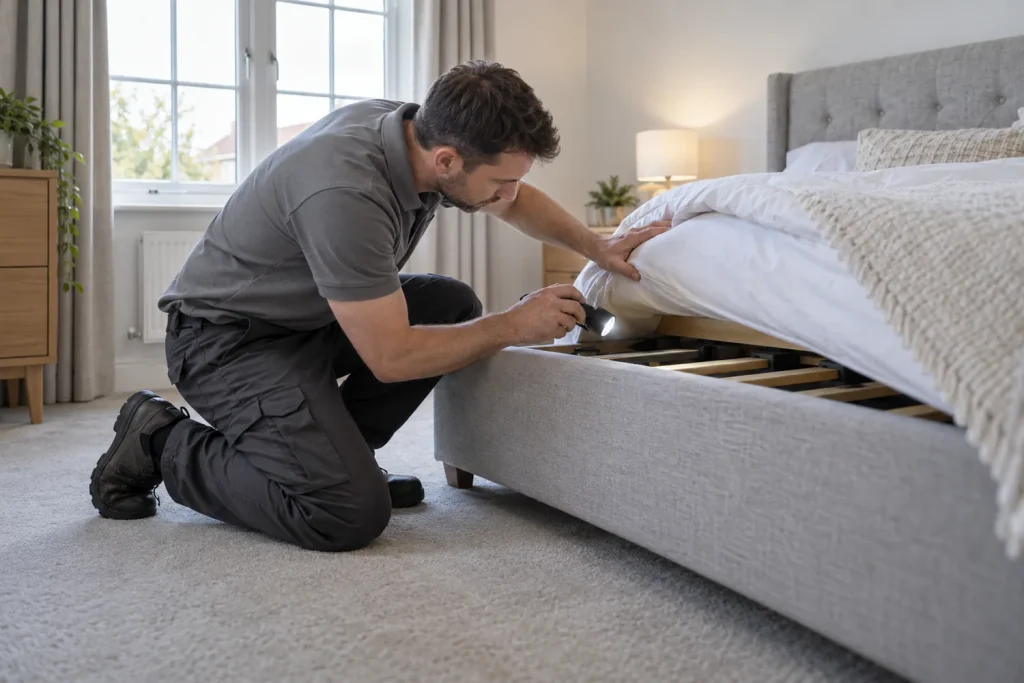

The mattress is the obvious place to check for bed bugs, but it is only one part of a sleeping space. A person can examine the top and sides carefully, find nothing and still miss activity in a frame joint or the bedside cabinet. The aim of a wider inspection is not to empty the whole room onto the landing. It is to follow the places where a small, flat insect can shelter close to a person who sleeps or rests there.
Bed bugs can hide in furniture, bed frames, clothing, behind pictures and under loose wallpaper, as the NHS notes. A careful search follows the room's layout, starting at the bed and moving outward. Record what you find before cleaning or moving it. If evidence is convincing, professional bed bug treatment in Greenford can address the whole affected area rather than a mattress alone.
Start at the edges of the bed
Put fresh batteries in a torch or use a bright phone light. Keep a small notebook or take photographs with the location in frame. Inspect the mattress piping, labels, handles and folds, then look at the place where the mattress touches the frame. Small dark spots, shed skins or a live insect are more useful evidence than a general impression that the bed looks dusty. If you find an insect, capture a clear photograph and, if possible, keep the specimen securely for identification.
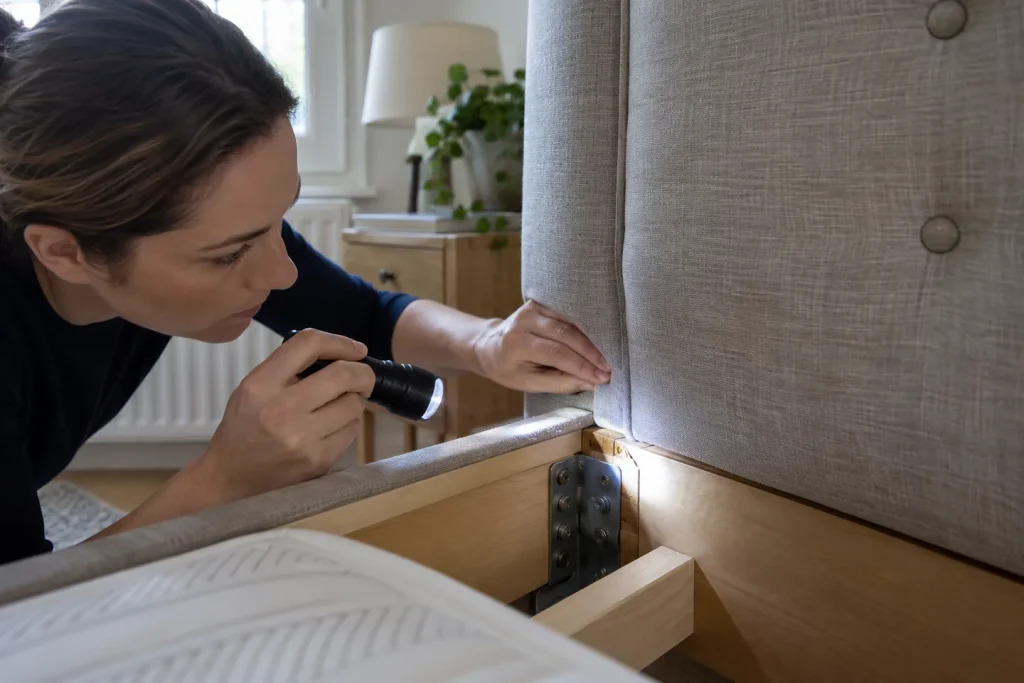
On a wooden frame, focus on joins, screw holes, slat ends and the rear of the headboard. On an upholstered base, look at seams, folds, staples and fabric edges. A divan base may have internal spaces that a professional needs to inspect; avoid damaging furniture to reach them. Check the wall immediately behind the headboard and the skirting beneath it. The search should be methodical enough that you know which surfaces have actually been examined.
Do not carry the bed into another room to get a better view. Moving an item that may hold insects can spread them. You can shift it a little within the room if it is safe and you can restore it afterwards. If the frame is heavy or fixed, leave inaccessible points for a professional. The purpose of the initial survey is to identify evidence and its pattern, not to prove every crevice is clear.
Check the furniture people touch every day
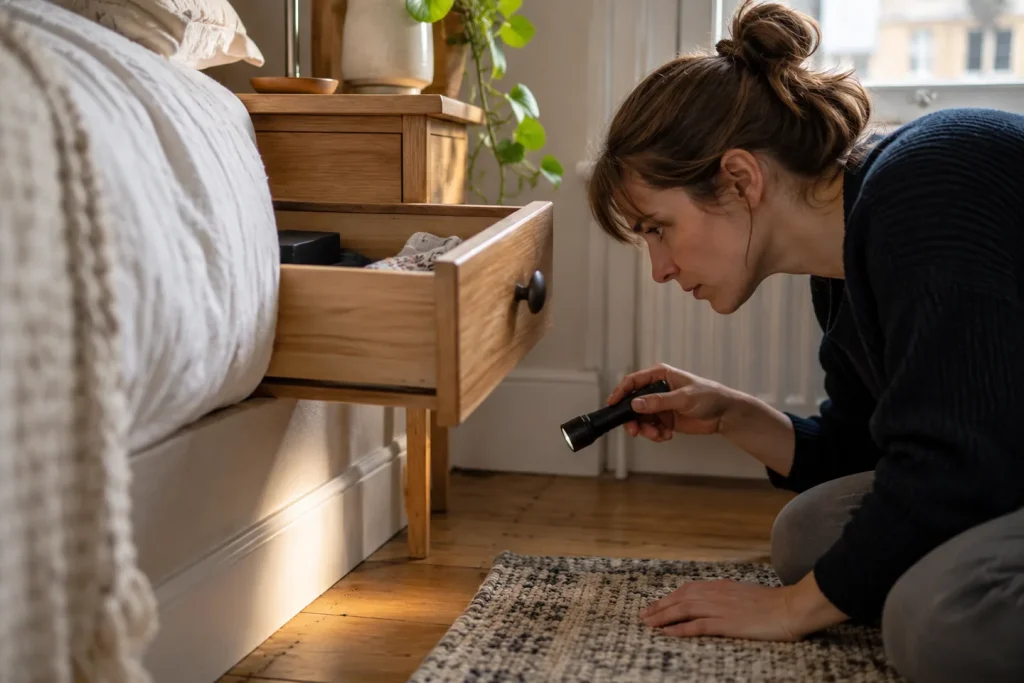
A bedside table deserves more attention than a distant bookcase. Inspect drawer runners, undersides, back panels and the junction between legs and top. Empty one drawer at a time into a bag or container in the same room. Look at items before returning them; do not transfer the contents to another bedroom as a temporary tidy-up. The back of a picture above the bed and the rear of a wall-mounted bedside light can also provide shelter, though you should never open electrical fittings yourself.
Think about where people spend time beyond the bed. A chair used for evening reading or a sofa where someone naps may be relevant. Examine upholstery seams and the underside of cushions, including the chair's frame if accessible. If the household has recently changed where it sleeps, tell a pest professional. That timeline may help explain why signs appear in one room and then another.
Curtain pleats near the bed and carpet edges are also worth a look. Inspect rather than ripping them out. Dark marks in a crack are not automatically bed bug waste, so photograph the context and seek identification. If the evidence is in natural-fibre carpets or stored textiles rather than near a sleeping place, carpet beetle treatment in Greenford may be a more relevant service to discuss. Correct identification matters before any treatment choice.
Clothing, luggage and stored belongings
Bed bugs can be transported in luggage and clothing. That does not mean every wardrobe needs to be emptied at once. If a suitcase has been close to the bed or the first signs appeared after travel, check its seams, pockets, lining and handle attachment points. Examine the bag on a clear surface where anything found can be contained. Keep suspect items in sealed bags while you arrange advice, and avoid carrying loose laundry through shared rooms.
For washable clothing and bedding, follow the fabric care label. The NHS advises a 60°C wash for affected items and a hot tumble-dry cycle of at least 30 minutes where suitable. A delicate item may need a different method. Ask the treatment provider how they want belongings sorted, because preparation differs between methods and between households. Treating everything indiscriminately may damage possessions while leaving a hiding place untouched.
Second-hand furniture is another possible route of introduction. Inspect seams, joints and underside before bringing an item into a bedroom. If you already own the item and suspect activity, do not abandon it in a communal area. That can pass a problem to someone else. Instead, document the evidence and ask how the item should be handled as part of the room assessment.
The room boundary and nearby spaces
Move from the bed towards skirting boards, wall joints and loose wallpaper. A narrow gap can shelter an insect, but not every gap is evidence of an infestation. Search with a torch for actual insects, cast skins or spotting. Inspect the back of nearby frames and the edges of a fitted wardrobe. If you live in a flat, note any signs beside shared walls or service routes for the person assessing the building. Do not open sockets, remove fixed panels or apply a spray into cavities.
A bedroom inspection may lead to the next room if evidence is found, especially if people rest there regularly. Decide that with a professional rather than moving possessions room to room in search of certainty. A targeted survey of adjacent spaces is more useful than an uncontrolled clear-out. The Greenford bed bug heat treatment page describes a specialist service that may be considered after the extent of activity is assessed; heat is not a reason to skip the inspection.
How to record what you find
Use a simple room sketch with the bed, bedside furniture and seating marked. Number the areas as you check them. For each sign, take one close photograph and one wider image that shows its position. Add the date, whether a live insect was seen, and whether the item has since been washed or moved. This helps a professional revisit the most promising points and can reduce the temptation to guess from memory.
If you do not find physical evidence, write that down too. An itchy mark alone cannot establish the cause. Monitor for further signs, and seek health advice for concerning bites or skin symptoms. The NHS says bed bug bites usually settle, but pain, swelling or itching that persists or spreads should be assessed. A pest professional can still help if repeated signs appear in a room you cannot inspect fully.
Plan the next step around evidence
An inspection that finds a live insect or a cluster of characteristic traces should lead to identification and a treatment plan. Ask which rooms need checking, how to contain belongings, what preparation is required and what follow-up will involve. Avoid unlabelled chemicals, domestic heaters or steam experiments around electrical items. Professional treatment should address the hiding places and the way the room is used, with clear instructions for the occupants.
The mattress remains the starting point, but the nearby frame, furniture and belongings tell the fuller story. A calm, room-by-room search gives you useful evidence without creating a bigger problem through hurried moving and disposal. If the signs point to bed bugs, use the bed bug service for Greenford to arrange an informed assessment.
Need help with a pest concern in Greenford?
Describe the signs you have noticed and where you found them. The team can discuss a suitable next step for your property.
Contact the team