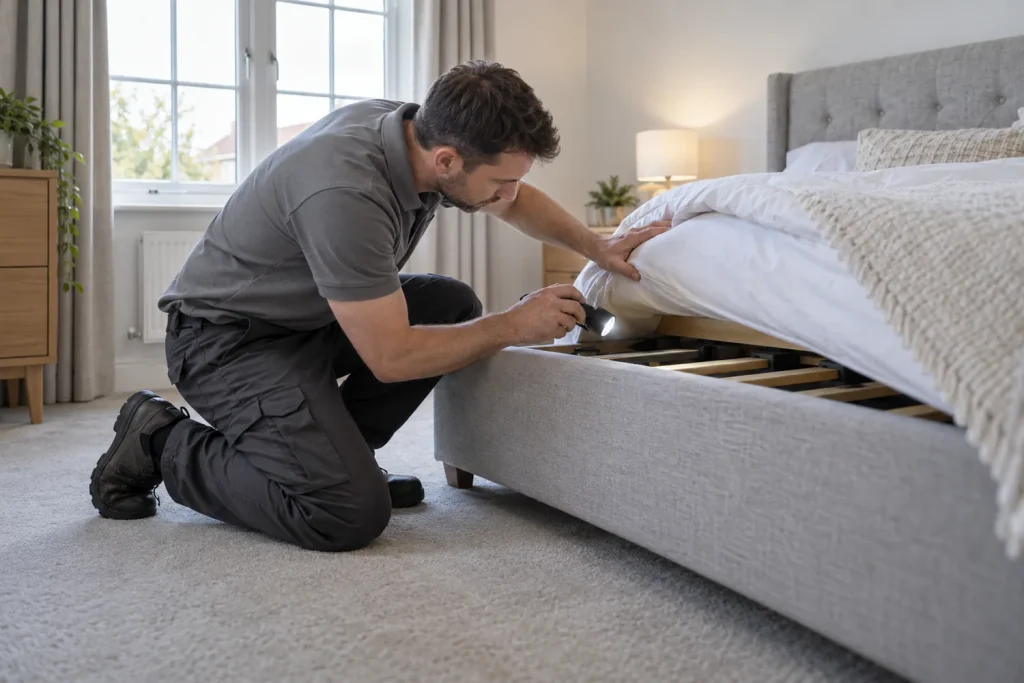

Heat treatment sounds simple: make a room hot enough to kill bed bugs. In practice, a professional treatment is a controlled process that begins with identifying the pest and ends with checking whether the relevant hiding places reached suitable conditions. Air temperature alone does not tell you what happened inside a bed base, a stack of belongings or the coolest corner of a room. That is why equipment, preparation and monitoring matter as much as the choice of heat itself.
The British Pest Control Association describes professional heat treatment as a specialist approach that requires a detailed survey and attention to cold spots. It is one option to discuss after an inspection, alongside other methods. The bed bug heat treatment service in Greenford is the relevant service page, but no method should be chosen solely from a headline. Ask what the survey found and how the proposed process fits your property.
Start with identification and extent
An itchy bite is not enough to specify a heat treatment. The NHS lists physical signs such as blood spots, brown marks on bedding or furniture, and insects hiding in bed frames and nearby items. A technician should look for evidence, identify the pest and assess where it is active. A single bedroom may not be the whole picture if someone regularly sleeps on a sofa or luggage has been moved between rooms.
Show the inspector photographs, a specimen if you have one, and a timeline of sightings. Explain where people sleep, where suspicious belongings have been kept and whether any treatment has already been attempted. If the insect is actually a carpet beetle or clothes moth, heat treatment for bed bugs would be the wrong response. The Greenford carpet beetle treatment page addresses one alternative pattern in textiles.
Ask which spaces and items the provider intends to include. A room can contain insulated pockets and dense furniture that heat slowly. The survey should also consider adjacent spaces and any route by which belongings may have spread activity. Understanding the boundary of treatment helps you avoid assuming that every item in the home has been addressed.
Preparation is specific to heat
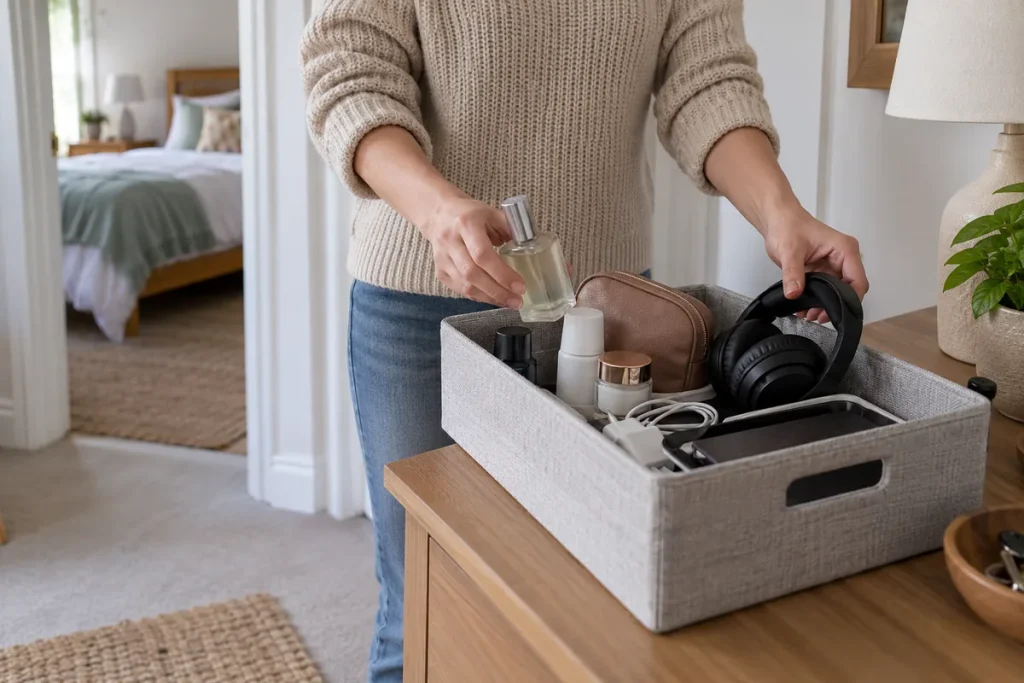
The provider should give you a written preparation list. It may cover access around furniture, the arrangement of clothing and what to do with items that are heat sensitive. Do not empty the room into the hallway by default. That can spread insects and removes items from the proposed treatment area. Ask where each category of belonging should go and label bags so that treated and untreated items remain separate.
Heat-sensitive possessions need particular attention: some electronics, cosmetics, medicines, candles, instruments, artwork and materials with adhesives may require removal or protection. This is not an exhaustive list. The technician should identify risk items for your particular home and explain the plan. If something must be removed, ask how it will be inspected or processed before it returns. Moving a suspect object out during treatment and bringing it back unchecked could undo the effort.
For bedding and clothing, follow the provider's instructions and care labels. The NHS advises washing affected washable items at 60°C and hot tumble drying where suitable. However, a professional heat plan may specify a different sequence for items kept in the room. Do not assume that every fabric tolerates a high wash, or that placing a suitcase in a warm cupboard is equivalent to treatment.
How professional heat is monitored
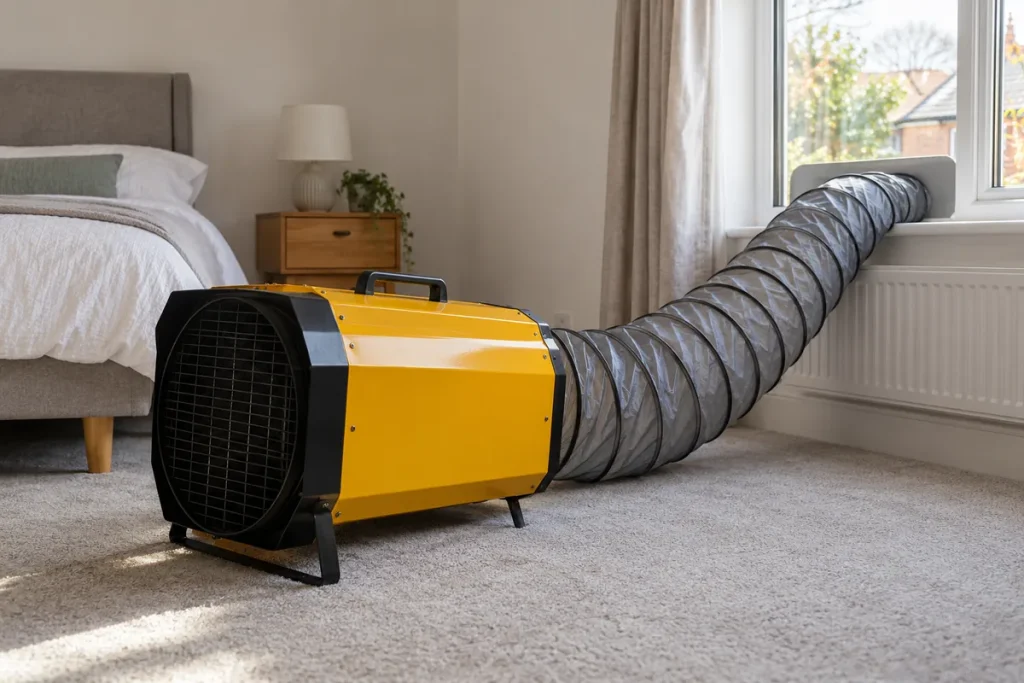
Specialist equipment raises the temperature of the treatment area while technicians monitor more than the air near the heater. The important question is whether the places bed bugs can shelter have reached the required conditions for the required time. The BPCA advises asking about sensors and a temperature record that shows cold spots, rather than relying on a single air reading. The precise technical settings belong to the trained provider and its equipment, not to a household DIY plan.
Technicians may move or reposition items during the work to help heat reach concealed spaces. They must also protect the building and possessions from damage. Ask what will be monitored, how the treatment will be documented and what happens if a particular item cannot safely be heated. The answer may involve a separate method or a change to the scope. Clear limits are more reassuring than a promise that heat reaches absolutely everywhere.
Domestic heaters, hairdryers, ovens and improvised steam are not substitutes. They do not provide reliable penetration or monitoring and can create fire, electrical or material damage risks. Steam is a separate technique with different effects; the BPCA specifically distinguishes it from whole-room heat treatment. If you have already tried a method yourself, tell the provider exactly what and where.
Heat compared with other treatment plans
Conventional professional treatment may use products with a residual effect in the places bed bugs travel. That approach has its own preparation and cleaning instructions, and may require follow-up visits. Heat has different strengths and limitations, especially for difficult belongings and cooler areas. A provider may recommend a combination or another method after assessing the room. Ask why the chosen approach suits the evidence and what alternatives were considered.
The standard Greenford bed bug treatment service can be discussed alongside heat. Do not infer that one method is universally quicker, safer or guaranteed to work from a generic comparison. The building layout, level of activity and ability to prepare the room all affect the plan. A good explanation should identify what will be treated, what remains outside scope and what the occupants must do afterwards.
Cost can be a legitimate question, but request a property-specific quotation rather than relying on a published average. Ask what inspection, preparation, treatment and follow-up are included. Do not interpret a quoted price alone as evidence of quality. The details of survey, monitoring and aftercare are what make the offer understandable.
Aftercare and follow-up
Before work starts, confirm when people and pets may re-enter and how the room should be used afterwards. Ask whether bedding can be put back immediately, what to do with removed items and when cleaning is appropriate. Instructions may differ if another product is used alongside heat. Keep the written report and the preparation list together so that everyone in the household follows the same plan.
Continue to note any live insects, fresh spotting or other physical signs with dates and photographs. Bites alone do not establish that treatment failed; skin reactions vary, and other causes are possible. If you find signs in a new room or on an item that was excluded, contact the provider promptly rather than moving it around. Ask whether a planned follow-up inspection is part of the service and what result would trigger further work.
If you rent or live in a shared building, give the responsible person a factual summary of the treatment area and any access needs. Avoid assigning a source without evidence. Coordinated handling of rooms and belongings is more useful than speculation about where insects originated.
Questions to ask before booking
Ask how the infestation was confirmed, which rooms and items are included, what the preparation list requires, and how heat will be monitored in cooler spots. Ask how sensitive items will be handled, whether another method will be used, what the report will show, and what follow-up is planned. Make sure re-entry and cleaning instructions are clear. These questions help you judge whether the plan addresses the actual hiding places rather than just warming the visible room.
Heat treatment is best understood as a managed service, not a temperature setting. Identification, survey, preparation, monitoring and aftercare each affect the result. If the evidence points to bed bugs, begin with a professional assessment and use the Greenford heat treatment service to discuss whether this approach fits your home.
Need help with a pest concern in Greenford?
Describe the signs you have noticed and where you found them. The team can discuss a suitable next step for your property.
Contact the team