Seeing a cockroach cross a kitchen floor is unpleasant, and the immediate urge is often to spray the place where it disappeared. A better first response is to preserve the evidence, protect food and work out whether the sighting is isolated or part of a wider pattern. Cockroaches can shelter in narrow spaces around warmth, moisture and food. Their activity may be concentrated somewhere you cannot see from the open floor.
This guide is for a Greenford household or small business that has just noticed a possible cockroach. It does not assume that every brown insect is one, or that a single product is suitable for every kitchen. The site's cockroach treatment service describes inspection of appliances, pipework, cupboards and cracks before targeted control is considered.
Pause long enough to identify the insect
If the insect is still visible, take a clear photograph from a safe distance. Include something in the frame that indicates size. Note the time, room and where it moved: beneath a fridge, behind a bin, into a wall gap or under a cabinet. If you cannot photograph it, describe its colour, approximate size, antennae and movement without claiming certainty. Many household insects look similar in a hurried glimpse.
Do not handle an insect with bare hands or bring it to another room for a better picture. A safely contained specimen can sometimes assist identification, but do not put yourself at risk to capture one. The BPCA cockroach guide gives identification features and explains why species matters. A pest professional can compare your observation with physical signs on site.
Protect exposed food first
Cover or put away food that was open near the sighting. Check packaging before using it, and discard anything visibly contaminated or damaged. Clean the immediate food-preparation surface with a method appropriate for that surface. If the sighting was in a commercial food area, follow the premises' food-safety procedure and inform the responsible person. Record what happened and where before cleaning removes every trace.
There is no need to empty the entire kitchen impulsively. Moving goods and equipment without a plan can hide the route or spread activity. Prioritise exposed food, accessible spills and the places in which the insect was actually seen. Keep a note of items that could not be moved safely, such as a built-in appliance or heavy shelving.
Inspect likely shelter without dismantling the room
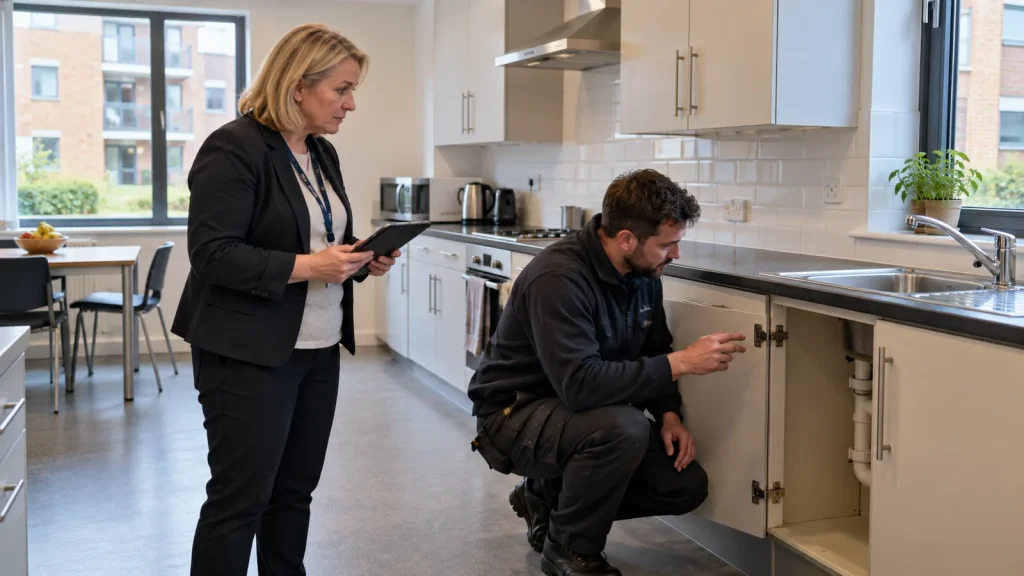
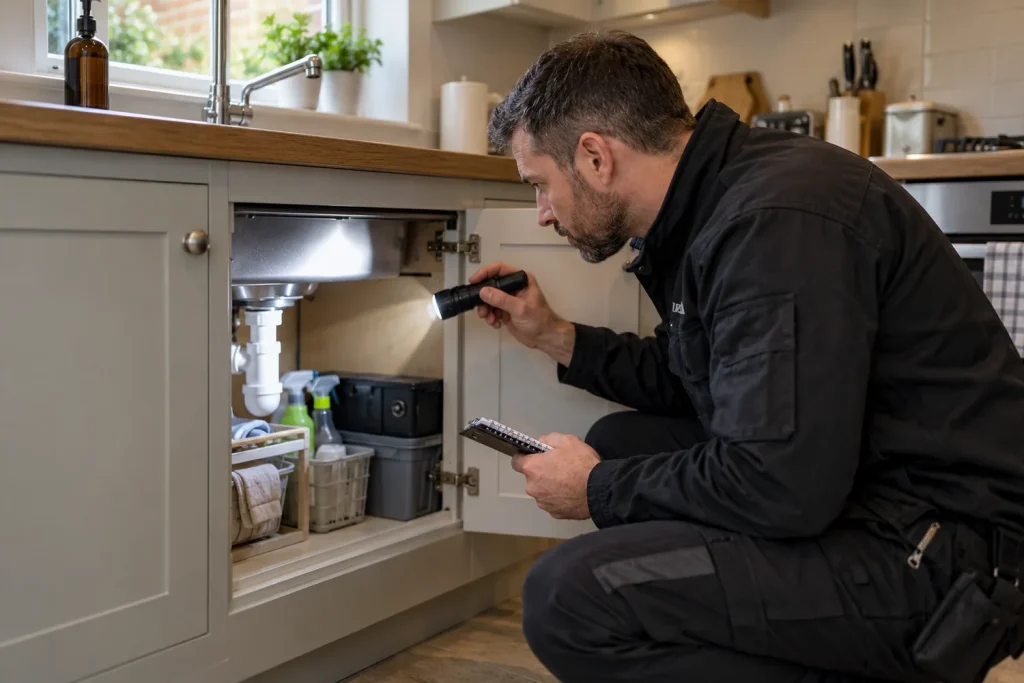
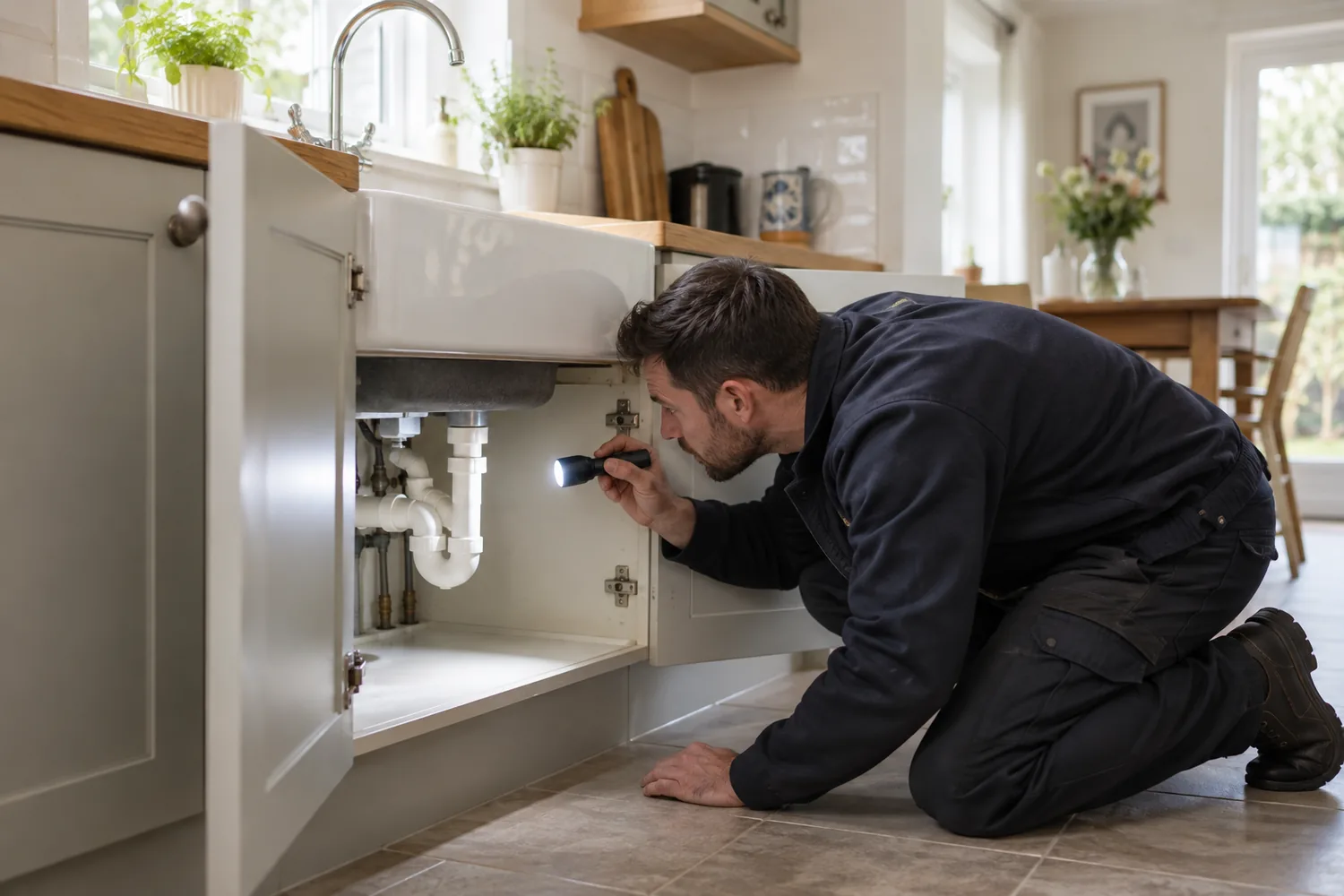
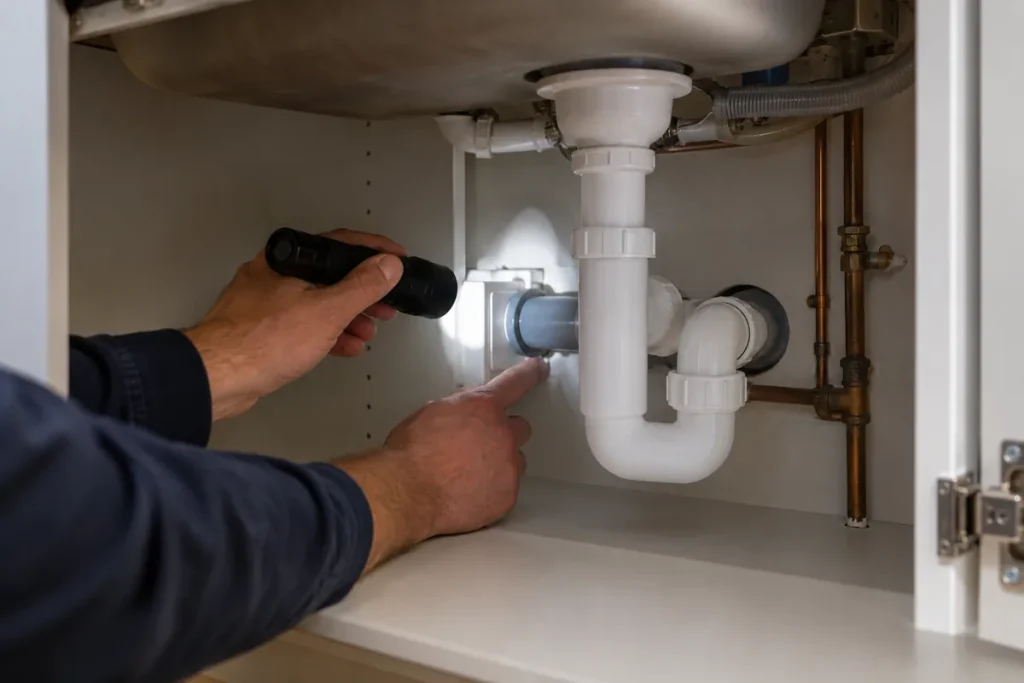
Use a torch to check accessible edges near the sighting: under the sink, around pipe entries, behind a removable bin and along the base of cabinets. Look for live insects, dark spotting or egg cases. Do not reach into electrical housings, pull a cooker away from its connection or remove fixed panels. Photograph anything you find with its surrounding location. A close-up of a mark is less helpful if no one can tell which cupboard it came from.
Warm appliances and moisture can matter. A leaking pipe or condensation behind a fridge may create favourable conditions, but finding damp does not prove cockroaches are present. Record the leak for maintenance and keep identification separate. The site's inspection approach explains why physical evidence, access limits and the people using the room should inform the treatment decision.
Avoid scattering spray or powder
An aerosol may kill a visible insect while missing sheltered activity. Unplanned product use can complicate later identification or interfere with targeted control. It can also create unnecessary exposure in a food area. Do not mix products or apply a chemical to a surface unless its label specifically permits that use. Tell the technician about any spray, bait or powder already used, including where and when.
The HSE guidance on biocides says to consider non-chemical alternatives, choose products suitable for the target and follow their labels. Professional-use products are not for general public use. A first-response article should therefore focus on observation, hygiene and arranging an assessment, not on dosing or placement instructions.
Make the kitchen less hospitable tonight
Clear accessible crumbs and spills, put open dry food into sound closed containers and empty food waste into a lidded bin. Deal with standing water if you can do so safely, and report a leak that needs a repair. Avoid leaving dishes with food residue overnight. These actions reduce food and water access but are not proof that an infestation is resolved.
Do not attribute activity to a dirty home or business. Cockroaches can enter and move through service routes, and a clean space can still have a hidden harbourage. The useful question is which conditions are present in this particular room and which can be changed. Keep the immediate routine realistic so it can be followed until the assessment.
Check adjoining spaces and shared routes

If the insect disappeared into a service opening, note whether the same wall borders a bathroom, utility space or another unit. In a shared building, a single flat's treatment may be limited if movement uses a communal route. Tell the building manager or landlord what was seen, with dates and photographs, rather than blaming another occupier. Coordinated access may be needed if an inspection finds evidence beyond one room.
An insect seen in a kitchen is not necessarily a cockroach. If it was jumping rather than running, or if bites and pet resting areas are involved, describe those facts; the site's flea treatment page addresses a different pattern. If small insects are associated with damp bathrooms, the silverfish-control page may be a better comparison. Identification prevents an irrelevant response.
What to tell the pest professional
A useful photograph is more than a close-up
When possible, take one image that shows the insect and one that shows the wider corner, appliance or pipe route. This helps the assessor find the place again. Avoid sending a photograph of a bare patch of floor accompanied by a confident species name. If the insect escaped before you could take a picture, write down its route while it is fresh in mind. Sketch a simple kitchen plan if several sightings occurred in different places. Mark dates beside each location, including any night when you checked and found nothing. The empty check is not proof of absence, but it helps distinguish a recurring pattern from a single event. Keep original images rather than editing colours or adding filters, as appearance may matter to identification.
Give the postcode, room, sighting date and the precise place the insect entered or left your view. Say whether anyone has found live insects, egg cases or marks elsewhere. Mention food operations, children, pets, aquariums, existing products and areas that cannot be accessed. Ask what evidence supports the identification and whether monitoring is useful before or after treatment.
The contact page asks for the signs, rooms and access restrictions. Have those details ready. If a business is involved, identify the person who can authorise access and receive preparation instructions. A clear named contact helps keep food safety, maintenance and pest work aligned.
Watch the result, not just the first visible insect
After an inspection, follow the specific preparation and aftercare instructions. If monitors are placed, do not move them casually. Record further sightings with date, time and location. A continuing insect in a new part of the building may change the assessment; a quiet night on its own is less informative than a pattern over the agreed review period.
The first cockroach sighting calls for calm, precise action: protect food, capture the evidence, inspect accessible edges safely, reduce food and water access, and arrange identification. A targeted plan can then address the shelter and routes that a quick spray would never reveal.
Need help with a pest concern in Greenford?
Describe the signs you have noticed and where you found them. The team can discuss a suitable next step for your property.
Contact the team