An itchy mark noticed after a night in bed can make the whole room feel suspect. Yet the mark itself rarely tells you what caused it. People react differently to insect bites, and a similar-looking patch can have many explanations. A useful investigation starts with the bedroom rather than the skin: look for insects and the physical traces they leave, record where you find them, and keep your belongings from spreading a possible problem while you decide what to do.
The NHS lists bites, small blood spots on bedding and brown spots on furniture among possible signs of bed bugs. It also notes that bed bugs hide in mattresses, bed frames, furniture, clothing, behind pictures and under loose wallpaper. None of those signs should be read in isolation. A blood spot may have another source, while a photograph of a rash cannot confirm a pest. This guide gives you a careful sequence for checking a Greenford bedroom without turning a suspicion into a conclusion.
Begin with the bed, but do not strip the entire room
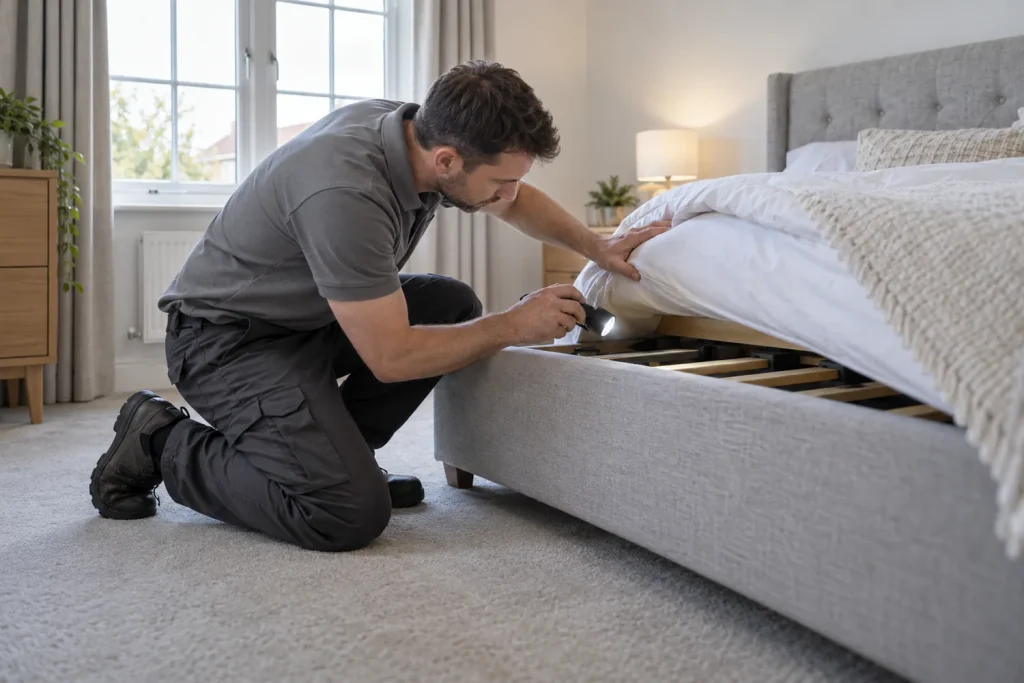
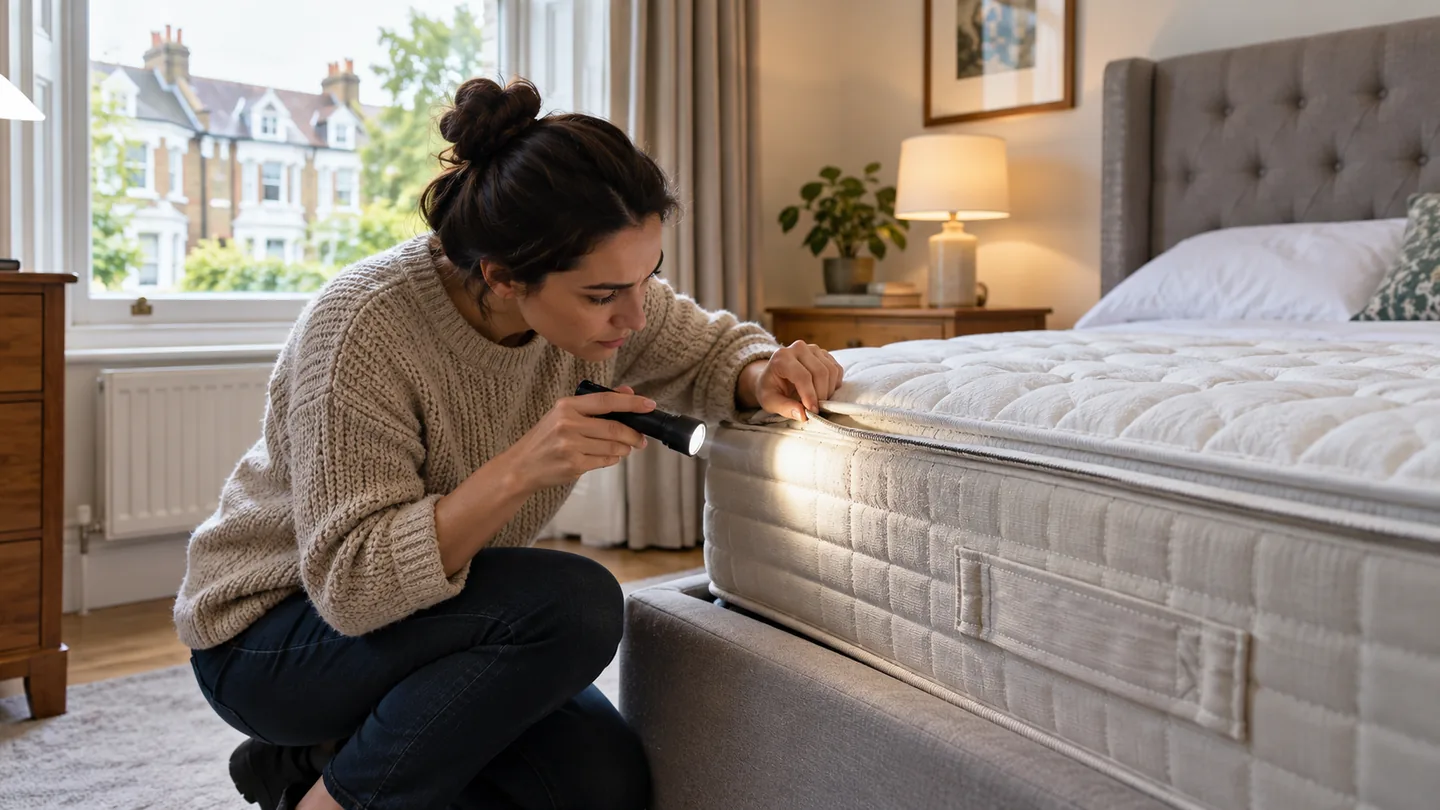
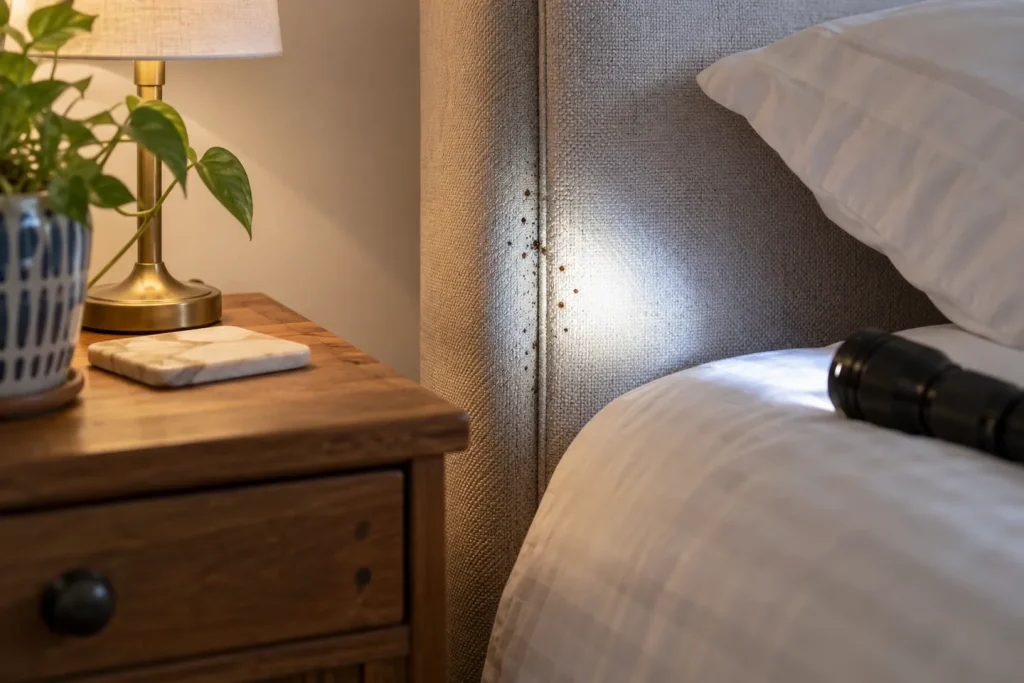
Take a torch and examine the bed while the bedding is still in place. Look at the sheet near the pillow and where you usually sleep. Record any small dark or rusty-looking spots with a photograph. Lift the sheet slowly and inspect the mattress seams, piping and labels. Bed bugs can fit into narrow joins, so a quick look across the flat centre of the mattress is unlikely to answer much. Check the headboard, its joins and the point where it meets the wall if you can reach them without damaging anything.
Inspect the bed frame next. On a wooden frame, look around screw holes, joints and slats. On an upholstered base, concentrate on seams and folds. A live insect is stronger evidence than a skin mark; adults are small, oval and often brown or reddish-brown. You may also see shed skins or dark spotting in a hiding place. Do not identify a tiny insect from colour alone. Take a clear close-up image, ideally with a ruler for scale, and keep any specimen in a secure container for identification.
Avoid carrying loose bedding through the house during this first check. If it needs washing, place it in a bag in the affected room before taking it to the machine. Follow the care label. The NHS advises washing affected bedding and clothing at 60°C and tumble drying on a hot setting for at least 30 minutes where the fabric permits. Heat-sensitive items need a different plan; do not damage valuable clothing in an attempt to follow a single temperature rule.
Widen the search in a measured way
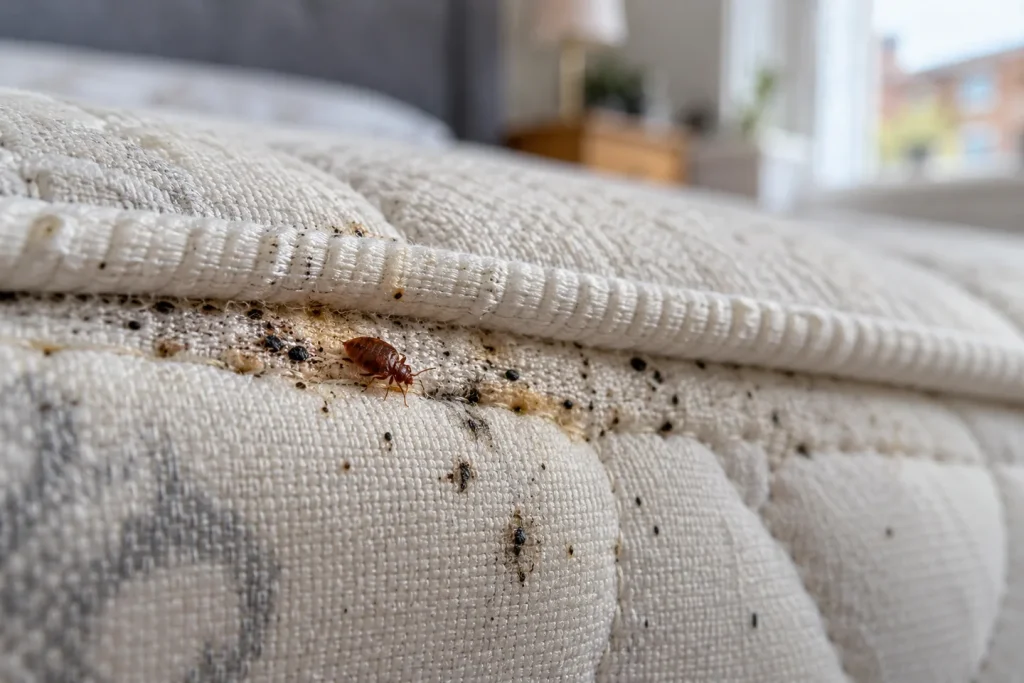
Bed bugs tend to hide close to a place where people rest, but an established problem can extend beyond the mattress. Check bedside tables, especially drawer joints and the underside rather than only the top. Look at the back of pictures above the bed, the edges of skirting and the seams of a nearby chair. A sofa used for sleeping may need as much attention as the bed. If there is loose wallpaper or a gap around a fitting, note it; do not dismantle electrical fittings or tear away finishes yourself.
Work from the bed outwards and mark each place checked on a simple sketch. That prevents repeated searching of the same corner while a nearby chair is overlooked. Use a torch and a phone camera instead of moving every item into a corridor. Moving potentially infested belongings between rooms can make the eventual assessment more difficult. If you have a shared bedroom, ask the other person what they have noticed, but remember that one person may react to bites while another has no visible marks.
If you find an insect, do not immediately assume it is a bed bug. Other small insects can wander into bedrooms. Compare the shape and location with reliable identification information, or send a photograph to a pest professional. The Greenford bed bug treatment service is relevant when the evidence points to bed bugs. If the activity is instead in stored wool, rugs or wardrobe corners, the moth control service may be more appropriate. Accurate identification saves unnecessary treatment.
What bites can and cannot tell you
Bed bug bites may be raised and itchy and can appear in groups or lines, according to the NHS. They can be less easy to see on darker skin. Their appearance varies between people and does not reliably reveal when or where the exposure happened. A new mark after travel does not prove a hotel was the source, just as a mark noticed at home does not prove the insects are in your bed. Avoid diagnosing the cause from a social media image or a pattern of three marks.
For the skin itself, keep the area clean and try a cool, damp cloth if it itches. Avoid scratching. A pharmacist can advise on suitable relief, and the NHS advises seeking medical help if pain, swelling or itching persists or spreads. The purpose of this room check is to identify a possible environmental problem; it is not a substitute for medical advice about a concerning reaction.
Keep a short diary for several nights: when marks are noticed, where you slept and whether any physical evidence appears. This is especially helpful if you alternate between rooms or have recently travelled. Do not deliberately sleep somewhere else to test a theory without discussing it with a professional, because moving sleeping places can complicate the search. A pest technician can use your observations alongside a physical inspection.
Common mistakes during an early investigation
One mistake is throwing away the mattress immediately. The bed may not be the only hiding place, and moving it through a building can spread insects. Another is spraying an unidentified insect or the entire room with an over-the-counter product. A misidentified pest will not respond to the right plan, and pesticides around sleeping areas require care. Do not use improvised heat sources, open flames or unlabelled chemicals. Professional bed bug heat treatment in Greenford uses specialist equipment and assessment; it is not something to recreate with a domestic heater.
Cleaning can help you see new evidence, but a spotless room can still have bed bugs. Their presence is not a judgement on housekeeping. Clear clutter around the bed gradually and keep items contained rather than placing everything in a neighbouring room. Photograph suspected signs before cleaning them. If you vacuum visible insects, follow the disposal advice from your pest professional and prevent the contents from being carried back through living areas.
Do not order an extensive treatment solely because of a rash. Equally, do not dismiss a live insect or repeated spotting because nobody in the household has bites. The practical threshold for expert help is credible physical evidence, repeated unexplained signs, or a room you cannot inspect adequately. A professional can identify the pest, map the affected areas and explain suitable options before treatment begins.
What to tell the pest professional
Send the clearest photograph of the insect or traces, with the date and exact location. Explain where people sleep or sit for long periods, whether there has been recent travel or second-hand furniture, and which belongings have already been moved or laundered. Say if children, pets or anyone with particular needs use the room. This information helps the inspection and any preparation advice fit the household rather than a generic checklist.
Ask which rooms should be examined and whether neighbouring rooms need attention. Ask how to prepare bedding and belongings, what follow-up will involve and when normal cleaning can resume. The answers depend on the treatment chosen. If a provider has given you preparation instructions, follow those rather than mixing advice from different treatment methods. You can read about the available bed bug treatment in Greenford before arranging an assessment.
The strongest conclusion from a first room check is often modest: you have either found physical evidence that needs identification or you have a clear record of where you looked and what was absent. Both are useful. They let you act promptly while avoiding a costly, stressful response to a bite pattern alone.
Need help with a pest concern in Greenford?
Describe the signs you have noticed and where you found them. The team can discuss a suitable next step for your property.
Contact the team