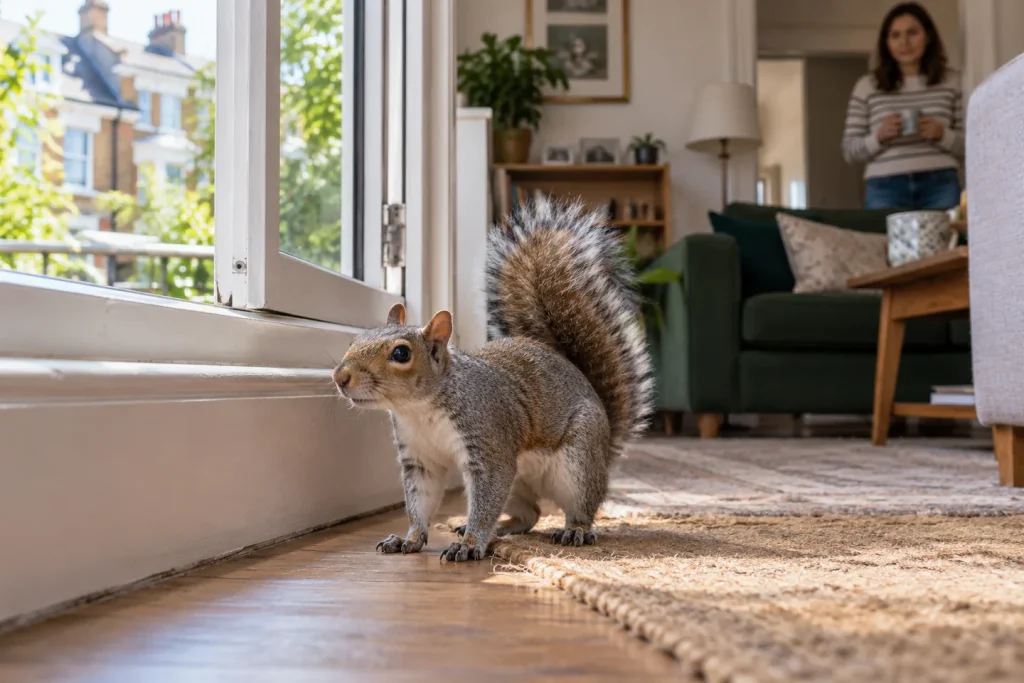
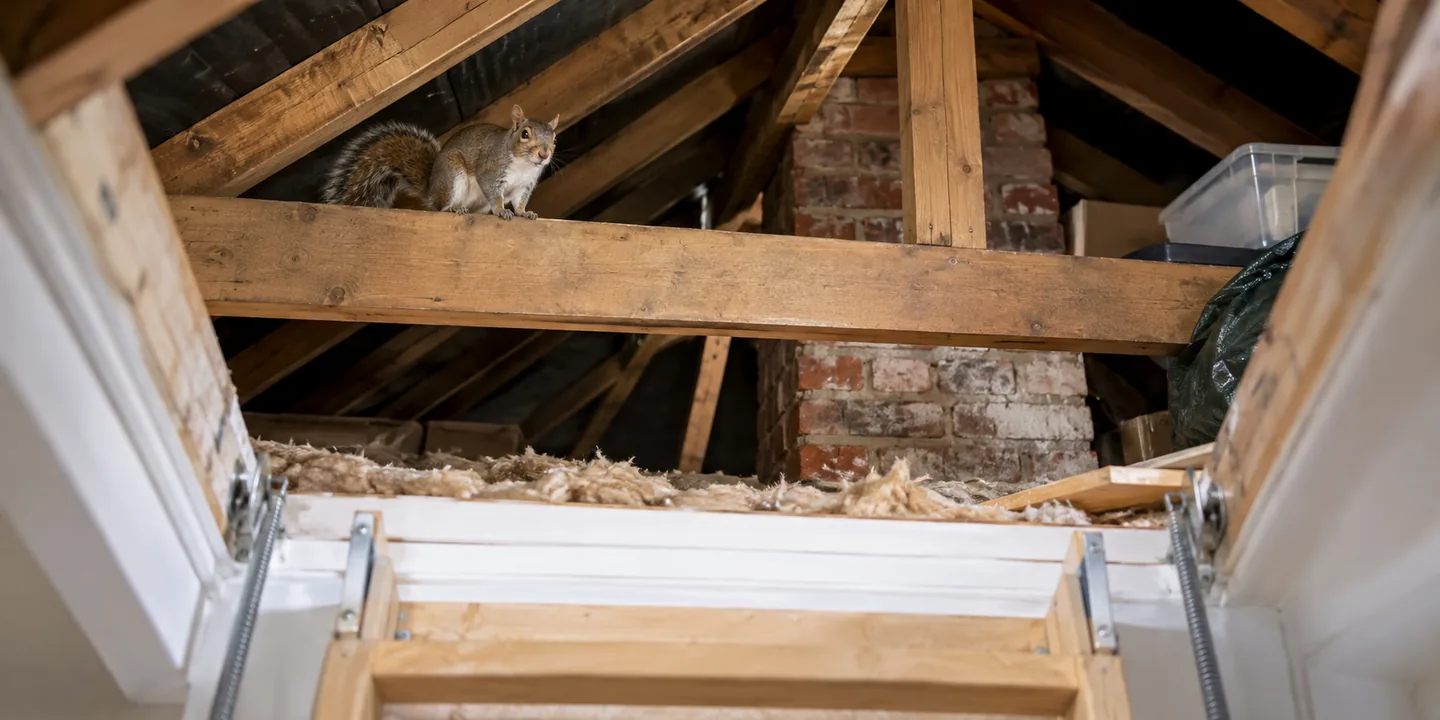
A sudden run of footsteps above a ceiling can make a loft feel occupied, but sound alone rarely identifies the animal. Grey squirrels can use roof spaces and are often active during the day, particularly around the times they leave and return to feed. Rats, birds and building movement can create overlapping noises. The safest approach is to note the pattern, look for evidence you can see without entering a risky space, and arrange an inspection when the signs point to an animal inside.
Listen for a pattern, not a perfect sound
Record the time, room and duration each time you hear movement. Is it a short burst in daylight, a repeated scrape near the eaves, or activity continuing after dark? Coventry City Council notes that squirrels in roof spaces are often heard around dawn and dusk, while Bedford Borough Council describes daytime activity as a useful clue. Neither timing nor loudness is conclusive. Sound travels along timbers and can seem to come from the wrong part of a roof.
Try to connect the sound to something visible outside. From the ground, can you see a squirrel repeatedly crossing a gutter, entering a damaged fascia or disappearing at the same roof edge? Do not climb a ladder or walk onto a roof to find out. A short video from a safe position may be valuable to an inspector. One squirrel running across a roof is ordinary outdoor wildlife; repeated entry through a specific opening is a different matter.
A useful observation log
For several days, note time, direction of movement, weather and any visible entry or exit. Keep the entries brief. If you see an animal entering, mark the exact point on a photograph of the whole roofline. This is more useful than a zoomed image without context. If there are obvious safety concerns, such as damaged electrical fittings or water ingress, seek qualified help promptly rather than waiting to complete the log.
Check accessible evidence without disturbing a nest
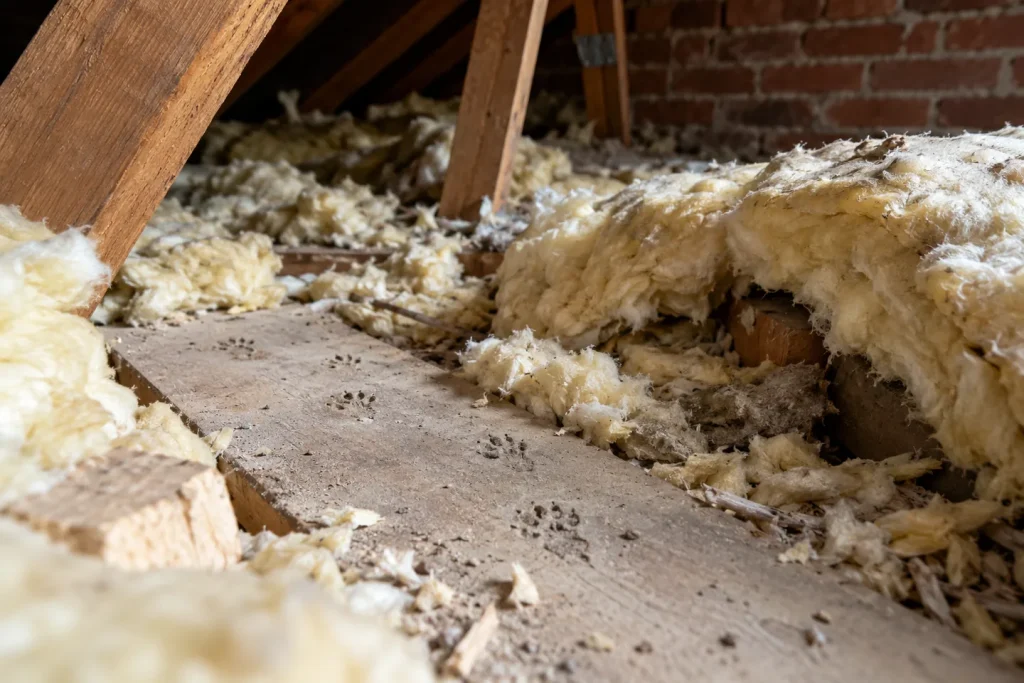
If the loft has a safe, boarded access route, look from the hatch with a torch. Do not step beyond safe boarding or reach into insulation. Signs may include disturbed insulation, gnawed wood, droppings, nesting material or a musky smell. Oldham and Bedford councils list such clues, but they also overlap with other pests. Do not assume that one pile of insulation proves a squirrel is currently present. Photograph what you can see without approaching an animal or nest.
Avoid opening the hatch if movement is close to it or if loose material may fall into the room. A loft can contain exposed wiring, fragile ceiling areas and contaminated dust. Professional inspection is particularly sensible when the space is unboarded or the route is obstructed. The Greenford squirrel control service can assess the evidence and the entry point together rather than relying on the noise alone.
Do not place food, traps or deterrents in the loft yourself. Squirrel control has animal welfare and legal considerations, and a trapped animal can injure itself or cause more damage. Oxford City Council advises ensuring no squirrels remain before proofing an opening. That sequencing matters even when the hole looks easy to close from outside.
Distinguish other likely causes
Birds can nest around roof edges, and their calls or wingbeats may give a different clue. Rats may use roof spaces too, especially where a route connects from lower parts of the building. An animal's size cannot be read confidently from how loud it sounds through plasterboard. If droppings or gnawing are concentrated near ground-floor food and pipe routes, the rat control page may be relevant to the wider inspection.
Not all loft noises are animal activity. Wind can move a loose vent or flashing, pipes can expand, and roof materials can shift with temperature. Compare timing with heating use and weather. If a sound follows strong wind but there is no animal evidence, a roofer may be the appropriate first call. The purpose of checking alternatives is to avoid repairing the wrong part of a building while a genuine defect remains.
Small droppings, fine gnawing around stored goods and activity along lower wall gaps may warrant a mouse control assessment rather than a squirrel response. Different animals can use the same building, so keep each observation tied to its location. A photograph from the loft hatch and another from a kitchen cupboard should not be treated as proof of one shared cause without inspection.
Look at the roofline from a safe position
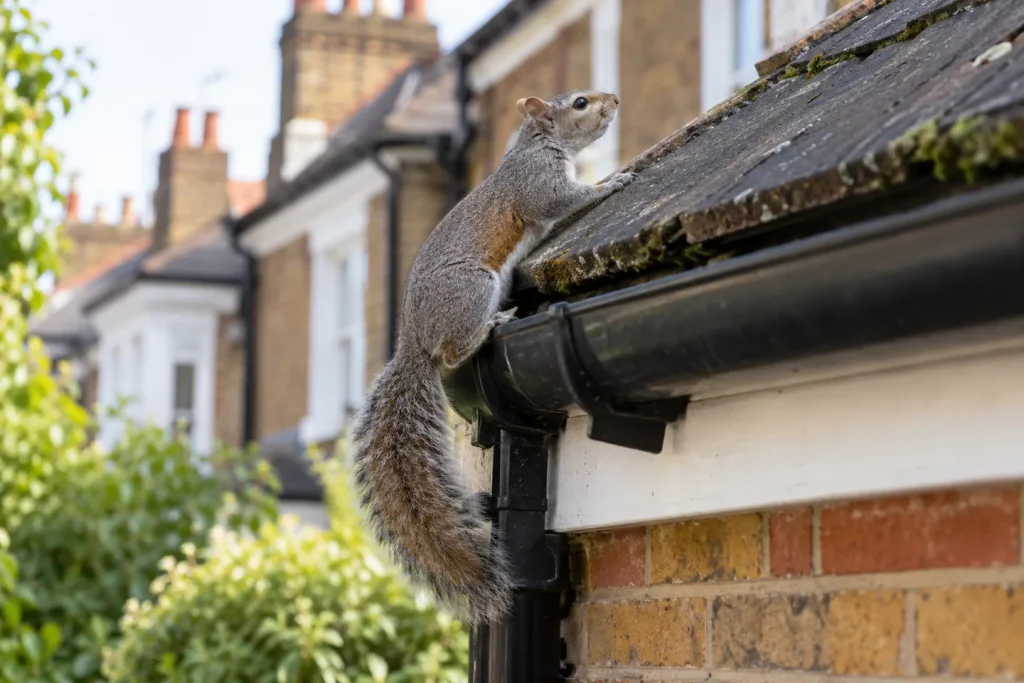
Walk around the building at ground level. Look for a damaged soffit, fascia, vent or tile edge and for branches touching or overhanging the roof. Coventry and Oxford councils both advise maintaining roof edges and managing nearby branches as part of prevention. A gap might be an entry point, but it might also be old weather damage. A series of sightings at that exact opening is stronger evidence than a gap alone.
Roof repairs should be planned with the pest assessment. Blocking a hole while a squirrel or young remains inside can cause distress, further damage and an unresolved problem. Crawley Borough Council specifically warns about the risk of sealing an occupied nest. Ask a professional to confirm the space is clear before a builder makes the permanent repair. If the structure is shared or attached to another property, the route may need coordinated inspection across boundaries.
If a roofer is already visiting for another repair, tell them about the suspected activity before work starts. They can document accessible defects without closing an opening unexpectedly. The pest professional can then explain whether the defect is actually being used and how clearance will be verified. This small handover is especially important when several trades visit on different days; otherwise one repair can make another inspection harder or leave an animal confined.
What if you only see squirrels in the garden?
Outdoor sightings are common and do not necessarily call for treatment. Oxford City Council distinguishes squirrels in their natural outdoor habitat from those causing damage inside roof spaces. Concentrate on whether there is actual building entry. A squirrel using a tree or fence near the roof is a reason to check maintenance, but it is not proof of loft occupation.
Protect the building while you seek help
If you suspect chewed wiring, do not touch it or move insulation to inspect it. Turn attention to electrical safety and contact a qualified electrician. If a water stain appears beneath the suspected area, have the roof or plumbing checked. Pest control can identify and remove an animal, but damaged building services still need repair. Keep records of each finding so the trades involved understand the sequence.
Explain to an inspector which sounds happen in daylight, where they are strongest and whether you have seen entry at the roofline. Ask what evidence confirms the species, whether young could be present, how entry will be stopped and what follow-up is needed. A good answer should address both the animal and the building route. The site's contact page is a way to share that record.
Check the outcome, not just the silence
After professional work and repair, continue observing the roofline for a short period. The absence of noise is helpful, but a visible opening or renewed activity at another edge needs attention. Keep branches from contacting the roof where this can be done safely by an appropriate professional, and maintain fascias and vents. If noises return, compare them with the original log rather than assuming the same cause.
The strongest sign of a loft squirrel problem is a combination: repeated daytime roof-space activity, visible use of an opening and physical traces inside. Begin with observations you can make safely and leave occupied lofts, roof access and wildlife control to qualified people. That approach protects the building and avoids turning a possible pest problem into a dangerous inspection.
Need help with a pest concern in Greenford?
Describe the signs you have noticed and where you found them. The team can discuss a suitable next step for your property.
Contact the team