
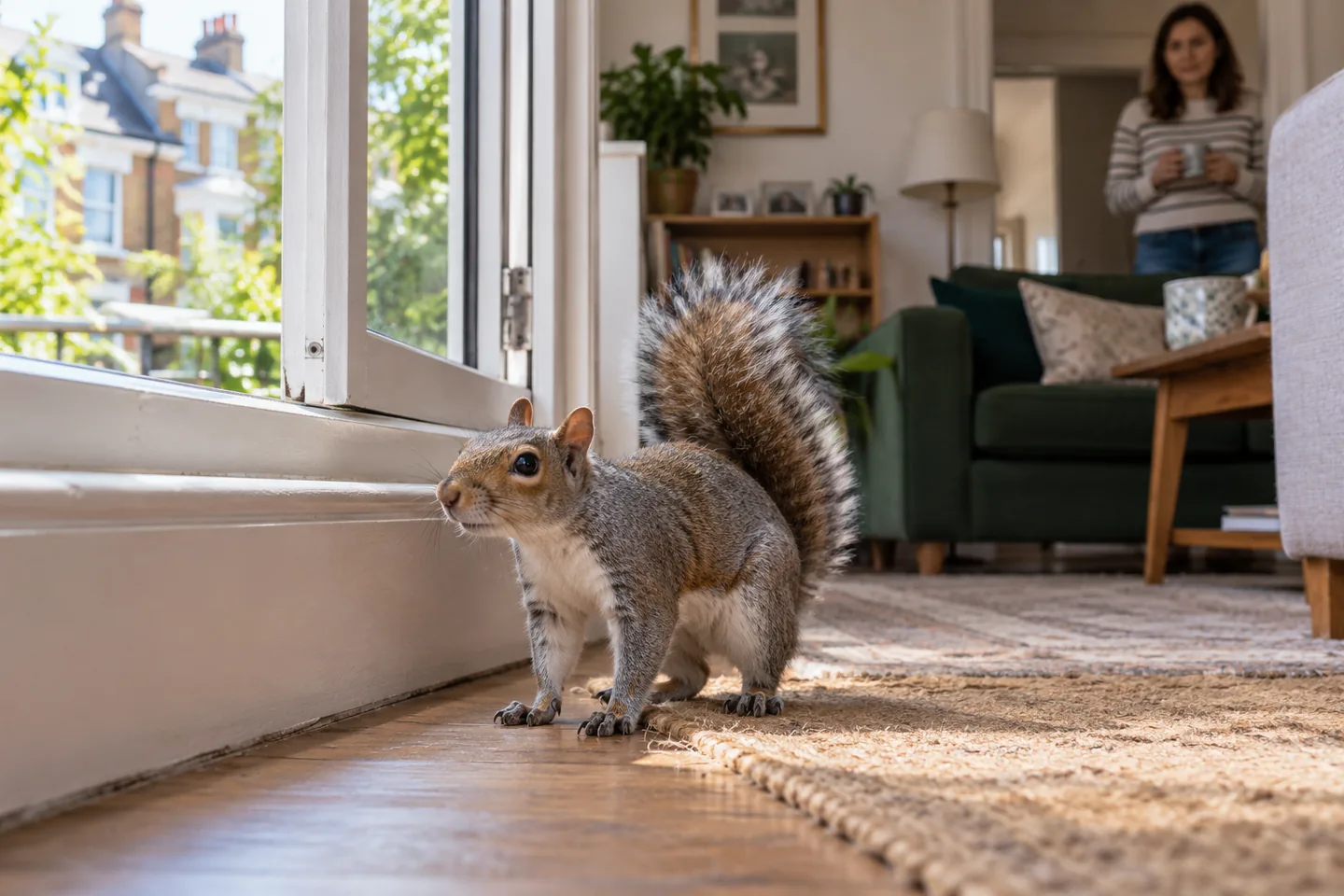
A squirrel inside a living room or bedroom is a different problem from one heard in the loft. It may be frightened, fast and unpredictable in a confined space. The immediate priorities are to give people and pets distance, avoid trapping the animal in a smaller space, and seek appropriate help. This article concerns a squirrel loose in occupied rooms; if activity is confined to a roof void, the inspection and proofing sequence is different.
Keep the room calm and people away
Move children and pets away without approaching the squirrel. Close doors to other occupied rooms only if you can do so without cornering it. Do not try to pick it up, chase it with a broom or throw a blanket over it. Even an apparently small animal can bite when frightened. If someone has been bitten or scratched, seek medical advice promptly and explain the animal contact.
Observe where the squirrel is from a safe distance. Note whether it came through a chimney, an open window or an internal door, if you actually saw the entry. Do not assume the visible exit is the route into the building. A squirrel loose in a room may have entered through a roof void and emerged through another opening. A photograph or short video can help identify the species and location, but do not move closer simply to obtain one.
Avoid a dangerous rescue attempt
Do not climb onto furniture to reach the animal, open a roof hatch beneath it or handle a trap. A stressed squirrel can move rapidly and an improvised rescue may drive it further into the building. If the animal is near electrical fittings, a lit fireplace or another hazard, keep clear and tell the professional you call. The safest plan depends on the room's layout, the route out and whether anyone is at immediate risk.
Contact appropriate help with clear details
Explain that the animal is loose in a living area, not merely heard above a ceiling. Give the room, its accessible exits and whether children or pets are present. The site's squirrel control service in Greenford is a relevant contact point. Ask what to do while waiting for assistance rather than applying generic advice to a room with its own hazards. If the animal appears injured, tell the responder so that suitable animal-welfare advice can be considered.
Do not rely on internet instructions for live trapping or relocation. Rules for grey squirrels differ from an ordinary garden animal rescue. Cardiff and Oxford councils state that a captured grey squirrel cannot simply be released back into the wild, and that control should be managed within legal and welfare requirements. A qualified professional can decide how to handle the situation. This is one reason to avoid placing your own trap in the room.
If the animal is in a shared building, tell the manager or landlord about the immediate situation and any suspected route. Access to an adjoining loft or service space may be needed later. Record who you contacted and what was agreed. A written account is useful if a roof repair must follow the animal's removal.
Think about how it entered, but investigate later
Once the immediate problem is under control, inspect the exterior from ground level. Look for a damaged fascia, vent or roof edge, or a branch close to the roof. A squirrel at an open window may have a simple entry route; one emerging from a ceiling needs a broader building assessment. Do not close a suspected roof gap until a professional is satisfied that no squirrel or young remains inside. Crawley Borough Council warns that sealing an occupied opening can cause suffering and more damage.
The loft may contain a nest or more than one animal. Silence after the loose squirrel has gone does not establish that the roof space is empty. Ask the inspector what evidence supports clearance and whether follow-up is required. A roofer can then repair the actual defect. This order protects both the animal and the building.
If you only saw the animal outside, on a fence or in a tree, this indoor response does not apply. Outdoor squirrels are common, and Oxford City Council distinguishes ordinary garden activity from a squirrel inside a property. The concern becomes a building issue when there is entry, repeated roof-space noise or damage.
Clean and check the affected room
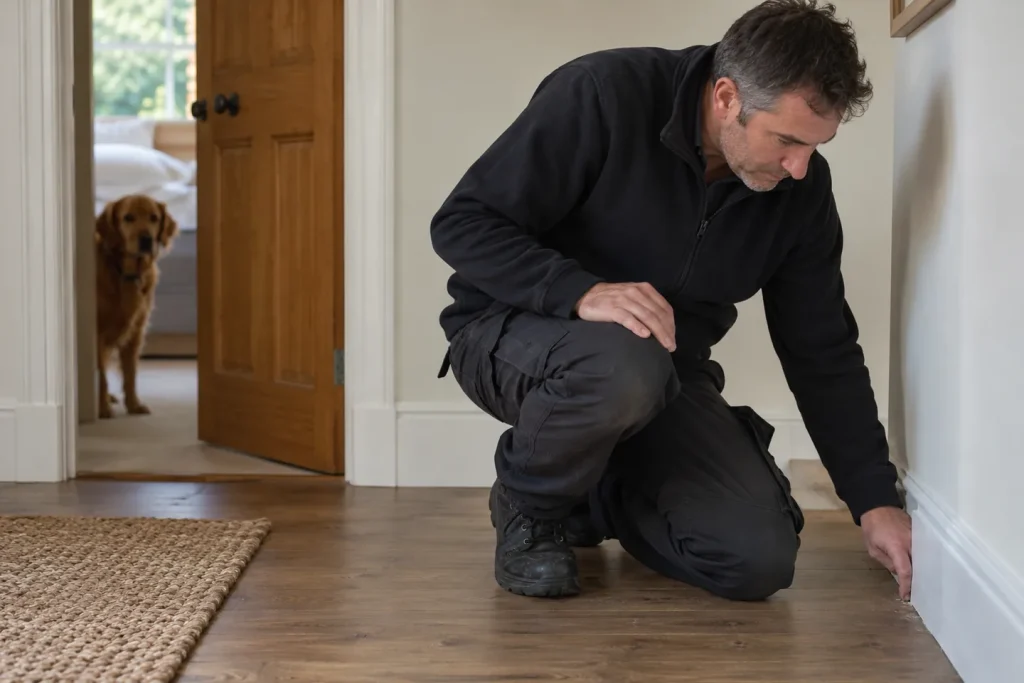
After the animal is removed, look for damaged objects, droppings and any contaminated food. Keep children and pets out until the area has been assessed and cleaned. Wear gloves for ordinary surface cleaning and wash hands afterwards. Do not dry sweep or vacuum suspected rodent droppings; UK Health Security Agency advice on rodent waste recommends damp methods to reduce airborne contamination. Seek professional advice for extensive soiling or inaccessible voids.
Check curtains, soft furnishings and stored items that were directly in the animal's path, but avoid shaking them in the room. If an item cannot be cleaned safely with its usual care method, isolate it and ask for material-specific advice. The purpose is to deal with what was actually touched or soiled, not to discard an entire room of belongings. Keep the area ventilated during routine cleaning if this can be done without reopening a route for the animal.
Check for gnawing near exposed cables, but do not touch damaged wiring. Ask a qualified electrician to inspect it. Damage around vents, windows or roof materials may need a builder or roofer. Pest control addresses the animal; the property may still need repair. Keep photographs of damage before work starts for your records.
If it happened overnight
Focus on separation and safety until suitable help is available. Do not allow a pet to investigate and do not sleep in a room where the animal is loose. Explain to the responder what you have done to limit movement between rooms. If it has disappeared into a void, do not dismantle the room to follow it. The next step is an inspection of the route, not a search by hand in concealed spaces.
Avoid confusing squirrels with other animals
If you did not see the animal clearly, describe its size, tail, movement and location without asserting a species. A rat may also appear unexpectedly indoors, and it calls for a different response. The rat control page is relevant if the evidence points to a rat. For very small animals or droppings near food, mouse control information may be more appropriate. A photograph taken from a safe distance helps the professional choose the right starting point.
The distinction matters because control, legal considerations and proofing differ. An animal running across a room is stressful, but guessing the species can send you towards the wrong remedy. Describe what actually happened and let inspection establish the cause and route.
Plan for a lasting resolution
Ask for a clear sequence: animal removal or clearance, inspection for other activity, repair of the entry point, checks for damage and follow-up observations. Note who will repair the building defect; it may be a different person from the pest professional. Watch the repaired area for renewed movement over the following days. If there are recurring sounds or sightings, report them with dates and locations rather than assuming a new animal entered through the same place.
You can discuss an indoor squirrel sighting through the site's contact page. State plainly if an animal is currently loose in a room so the urgency is understood. Until help arrives, the most valuable actions are simple: keep distance, separate children and pets, avoid handling, and preserve a safe route for assessment.
Need help with a pest concern in Greenford?
Describe the signs you have noticed and where you found them. The team can discuss a suitable next step for your property.
Contact the team

