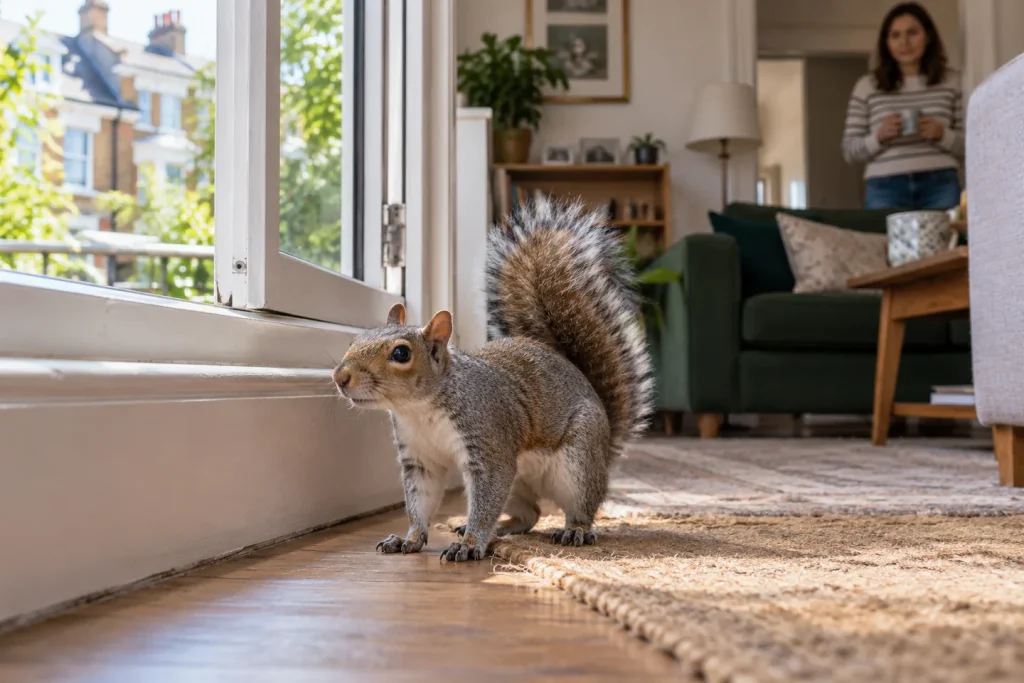
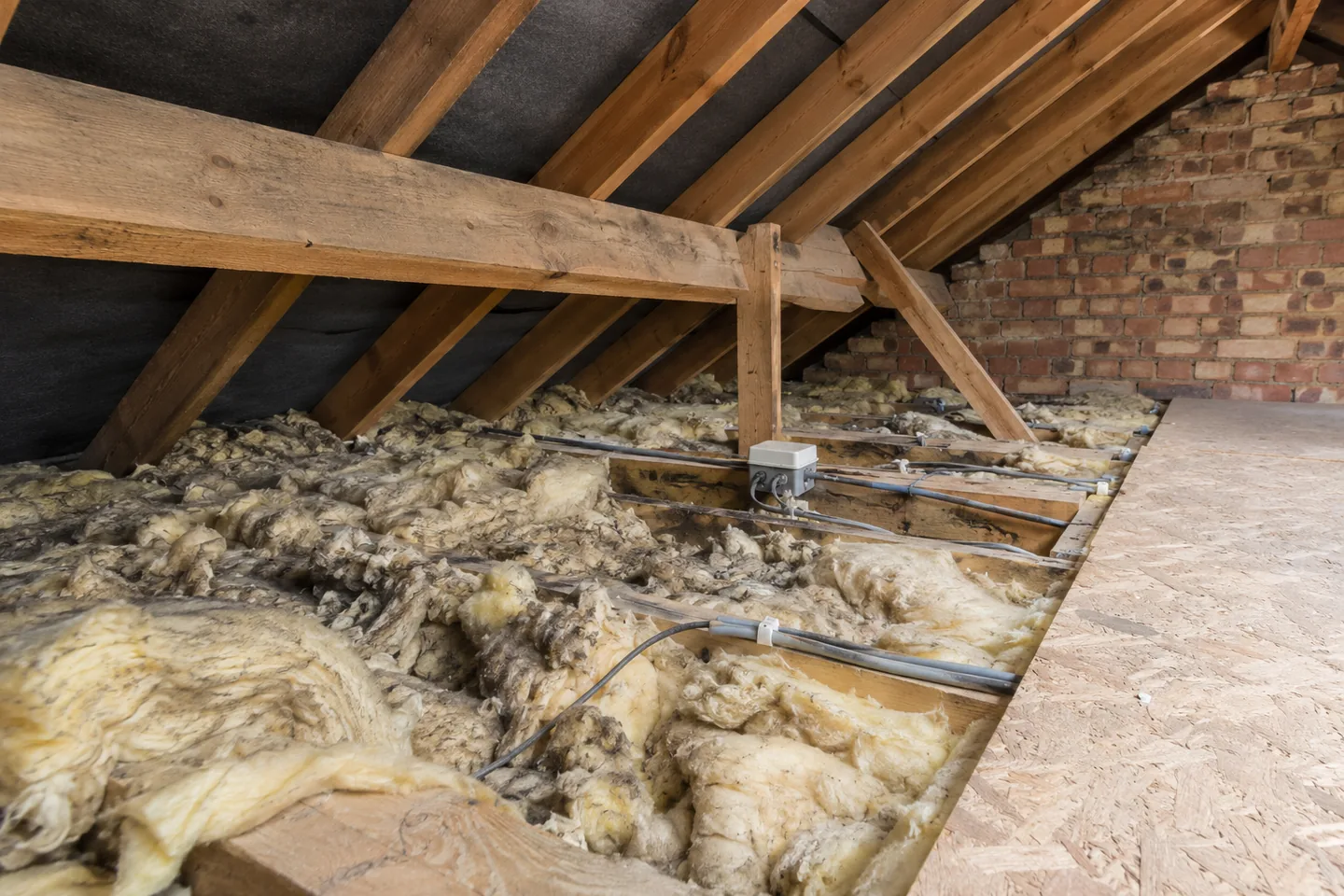
When a squirrel enters a loft, the noise may be the first problem anyone notices. Damage can be less obvious. Grey squirrels may gnaw materials and disturb insulation while moving or nesting, and roof spaces often contain electrical cables and pipes. That does not mean every sound has already caused a serious fault. It does mean the inspection should consider both animal activity and the condition of the building, without asking a householder to explore a hazardous void.
Separate visible damage from possible damage
Start with the evidence you can observe safely. Note recurring roof-space noises, sightings at a roof opening, damaged fascia or displaced material visible from a loft hatch. Do not step beyond boarded access or pull insulation aside to look for a nest. Oldham, Coventry and Oxford councils describe gnawing and insulation disturbance as possible signs of grey squirrels in roof spaces. These are reasons for inspection, not proof of the extent of damage in a particular home.
Take photographs from a safe position and note the date. A wide view shows where material sits relative to the hatch or roof edge; a close-up shows detail. If you see a loose cable, exposed conductor, scorch mark or water stain, stop exploring and contact a qualified electrician or appropriate building professional. The presence of an animal should not distract from an immediate electrical or water safety concern.
What insulation can reveal
Insulation may be compressed by ordinary storage, moved by previous work or disturbed by an animal. A local pile of shredded material, a route through it and nearby droppings together raise more concern than a single uneven patch. Bedford Borough Council notes that squirrels can chew loft insulation and collect it in a corner. Photograph the arrangement before anyone moves it. Avoid breathing dust or handling material you suspect is contaminated.
Insulation that has been soiled or destroyed may need replacement after the animal problem has been resolved. Ask the inspector to identify which areas are affected and whether specialist cleaning is required. Removing all loft insulation by default can be costly and unnecessary; leaving damaged material in place can also be unsuitable. A measured assessment should explain the scope of work rather than relying on the fact that a squirrel was once heard.
Wiring risk calls for an electrician
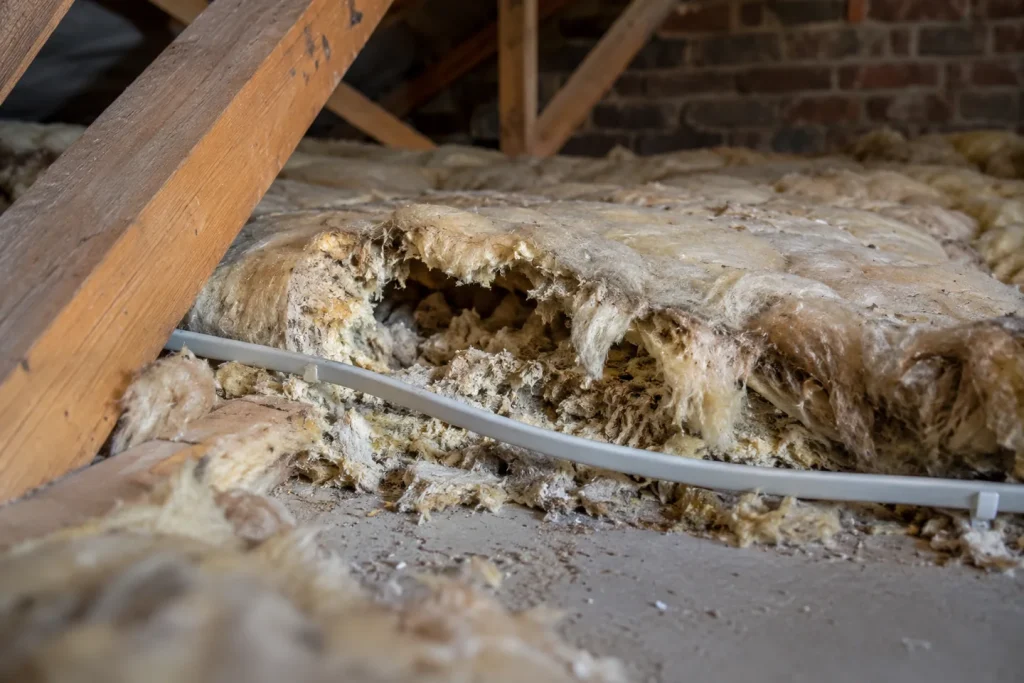
Gnawing near electrical cables can damage protective insulation. You may not see the affected section from the hatch, and a circuit can still work while a cable has been compromised. Do not test suspected damage by touching wires, pulling a cable or switching circuits repeatedly. A qualified electrician should inspect any visible damage and advise whether further testing or repair is needed. If you notice burning smells, smoke or an electrical fault, follow urgent electrical-safety procedures and keep clear.
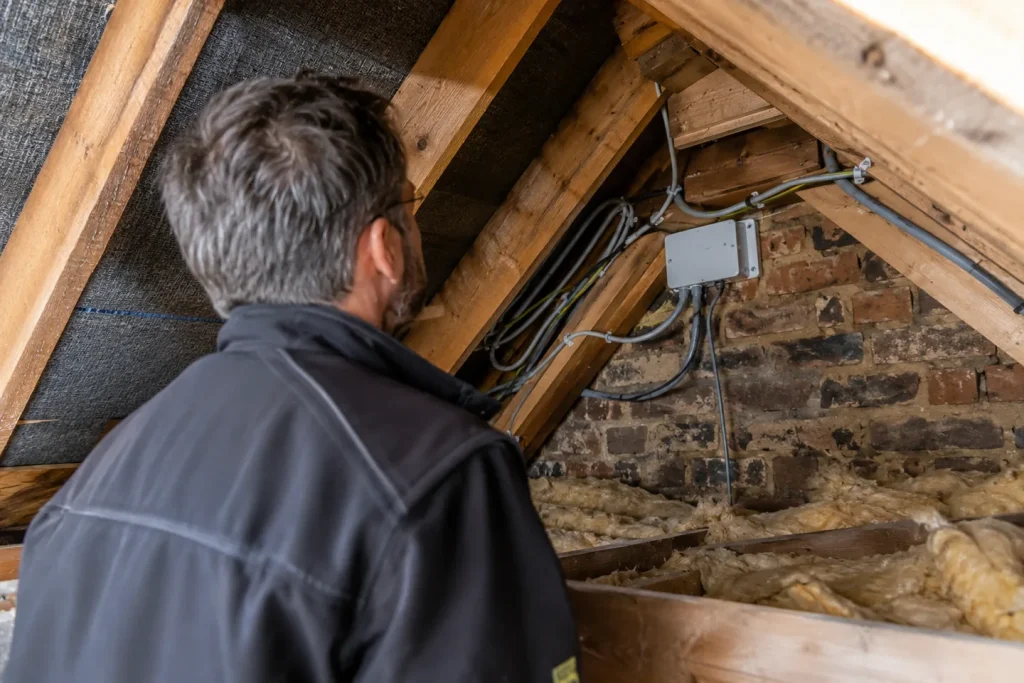
The pest professional's job is to identify and address the animal and entry route; an electrician's job is to assess electrical integrity. Ask them to share the relevant findings. For example, the pest inspector can identify the part of the loft with the strongest activity, while the electrician can decide how to access and inspect cables in that area safely. The Greenford squirrel control service is relevant to the animal assessment, but it does not replace a qualified electrical inspection.
Pipes and ventilation may need attention too. A gnawed flexible hose or damaged pipe can lead to water staining; blocked or disturbed ventilation can contribute to moisture problems. A roofer or plumber may be required if those signs are present. Avoid assuming that a roof leak was caused by a squirrel simply because one has been seen. Multiple building issues can coexist, and each needs evidence.
Keep the scope of repair proportionate to the findings. A photograph of one chewed board does not establish that every timber is damaged, just as an undamaged area near the hatch does not clear the whole loft. Ask the relevant tradesperson to describe what they inspected, what remained inaccessible and whether a further visit is needed after animal clearance. This record helps prevent both unnecessary replacement and overlooked hazards. If insulation is removed, arrange disposal and replacement in a way that does not spread soiled material through occupied rooms.
Inspection sequence matters
First establish whether an animal is actively using the loft. Next identify the entry route and any nest or young. Then plan lawful, humane control and confirm the space is clear. After that, arrange permanent roof repairs and assess damaged insulation, wiring or pipework. Crawley and Oxford councils caution against sealing a roof opening while squirrels remain inside. A rushed repair can trap an animal and make damage worse.
The order can vary when there is an urgent building hazard. An electrician may need to make a circuit safe before pest work proceeds. A roofer may need to stop active water entry while leaving a safe plan for animal clearance. Ask the people involved to explain the sequence and record who is responsible for each step. This avoids one trade undoing or obstructing the work of another.
In a shared loft or roof
Connected houses or flats may have roof spaces that are not divided as you expect. Noise in one room does not necessarily identify the entrance above that room. Tell the landlord or managing agent about the evidence and ask who can provide access to adjoining areas. Do not open partitions or alter fire separation yourself. A coordinated survey may find the actual defect and prevent a repair in the wrong place.
Reduce the chance of a repeat entry
Permanent proofing should restore the roof's weatherproofing and resist renewed access. Ask the roofer to check adjacent fascias, vents and tile edges, not just the most obvious hole. Manage branches that touch or overhang the roof through a suitable tree professional where necessary. Keep bird food from spilling near the building. These steps reduce routes and incentives, but they should follow confirmation that the loft is clear.
After repairs, retain photographs and reports. Listen for renewed activity and watch the former entry point from ground level. A quiet week is encouraging but does not replace a check that the structural defect was actually fixed. If activity returns, compare the new evidence with the original record. Another opening may have been missed, or the sound may have a different cause.
Not every roof-space noise is a squirrel. Rats can also occupy building voids and damage materials. If evidence is concentrated around food stores, lower wall openings or drains, the rat control page may be relevant. Small droppings or fine gnawing may point to a mouse control assessment. An inspection should identify the animal before choosing treatment.
Questions worth asking at the visit
Ask what confirms squirrel activity, whether it is current, and how the entry route was identified. Ask whether wiring, insulation, timbers or pipes need a separate specialist assessment. Clarify when the opening can safely be closed and who will carry out the repair. Finally, agree how follow-up will show the problem has ended. A written note of these answers is useful for homeowners and landlords alike.
The site's contact page is a route to describe roof-space activity and share photographs. Be clear about any visible electrical or water concern so those hazards can receive the right attention. The best outcome is more than a silent loft: it is a cleared space, a repaired entry point and an informed check of the materials that may have been affected.
Need help with a pest concern in Greenford?
Describe the signs you have noticed and where you found them. The team can discuss a suitable next step for your property.
Contact the team