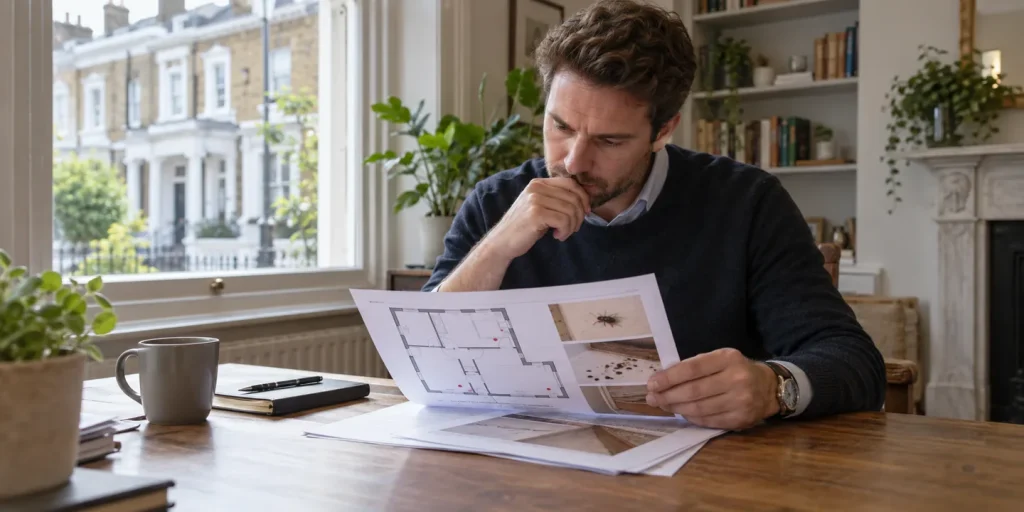
A scratching sound above the ceiling is difficult to ignore, especially when it starts after the lights go out. It is tempting to name the culprit immediately: mice. Yet a loft can carry sound from elsewhere in a house, and other animals can make noise near a roof. The useful first step is to describe the sound and look for safe, accessible evidence. That gives a Greenford pest professional a better starting point than a guess based on volume alone.
This guide is about observation, not climbing across an unfamiliar roof space. An unboarded loft can have exposed joists, insulation covering the safe path, wiring and difficult access. If you cannot see from a secure opening or designated walkway, leave the inspection to someone equipped for it.
Record the pattern before you investigate
Write down when the noise happens, how long it lasts and where it seems strongest. A brief scuffle near an eave at dawn is different from repeated light movement over a bedroom at night. Note whether the sound occurs after heating starts, during wind or when an upstairs appliance is running. Buildings make noises of their own, and pipes can carry sound. A phone recording can help if it captures the pattern, but do not rely on it to identify a species.
Avoid tapping the ceiling or repeatedly disturbing the space to provoke movement. You could cause an animal to move into a harder-to-reach void. Give the technician the room below the sound, the approximate time and whether the location has changed. These facts can guide a mouse-control assessment in Greenford without turning one noise into a premature diagnosis.
Why sound alone is unreliable
Light feet can sound heavy through a hollow ceiling, while larger animals may be heard only briefly. Movement in the loft can also travel along a wall before being noticed in a room. Mice tend to be active after dark, but timing is a clue rather than proof. Grey squirrels are often active by day and may use roof spaces; birds and other animals can also be involved. A technician needs physical evidence and a look at access routes to distinguish them.
The distinction matters because the response is different. A squirrel has particular legal and welfare considerations, and roof repairs need careful timing so an animal is not sealed inside. If daytime movement or visible roof damage suggests that possibility, read the site's squirrel-control information and report the actual signs rather than ordering a mouse treatment by name.
What you can check from a safe position
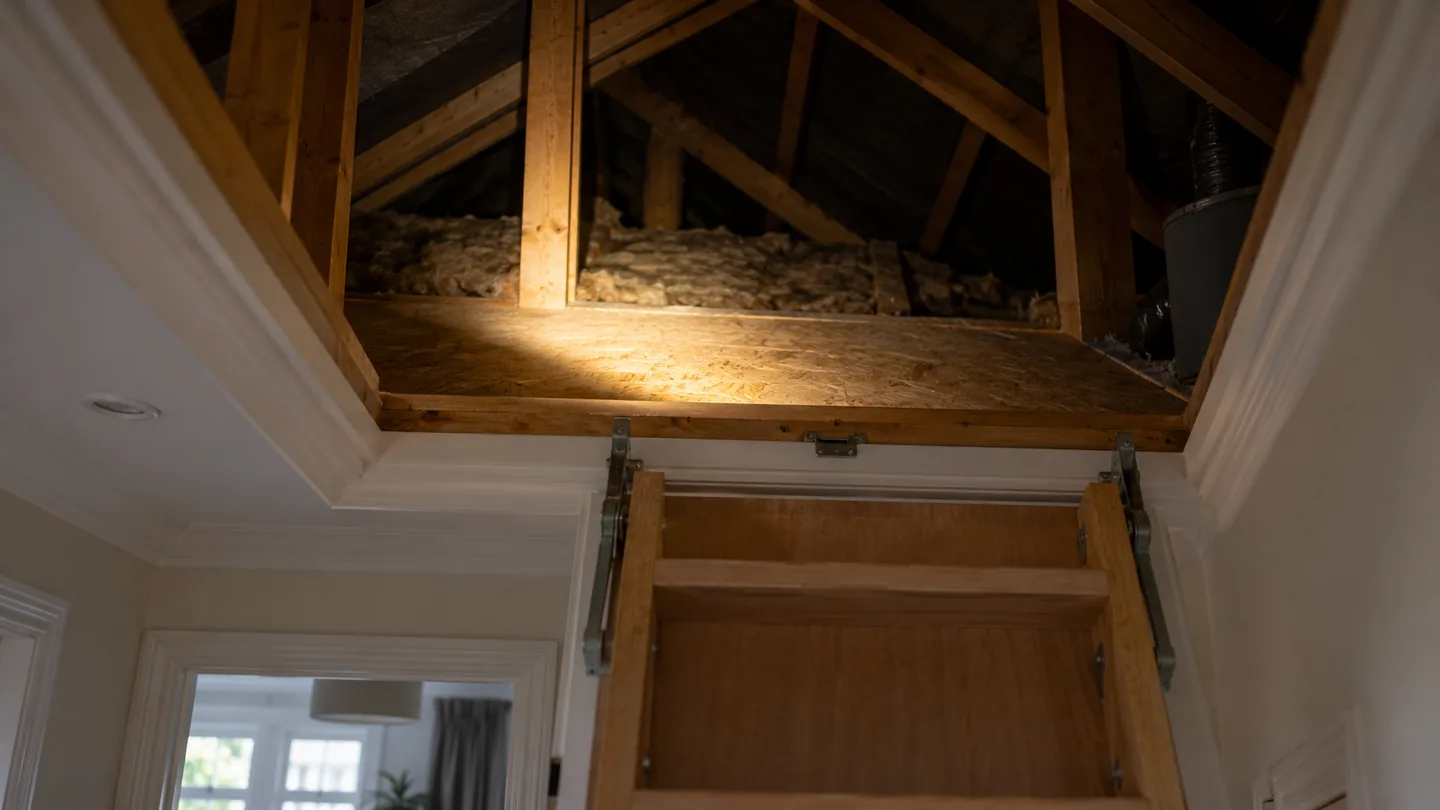
If there is a stable loft hatch and a safe standing place beneath it, a torch may let you inspect the area immediately visible from the opening. Look for droppings, disturbed insulation, shredded material or gnawed edges. Do not put a hand into insulation or behind stored objects. Wear sensible protection and avoid contact with contaminated material. If the loft has a boarded walkway that you know is safe, stay on it and do not move beyond the area you can assess securely.
Photograph evidence in context. A close image of an isolated dark speck is less helpful than an image showing its place beside a pipe, hatch or insulation edge. Use a ruler only if it can be positioned without touching the material or taking a risk. Do not handle an animal, nest or unknown trap. Close the hatch after checking, and keep children and pets away from any affected room or stored items.
Droppings need careful interpretation
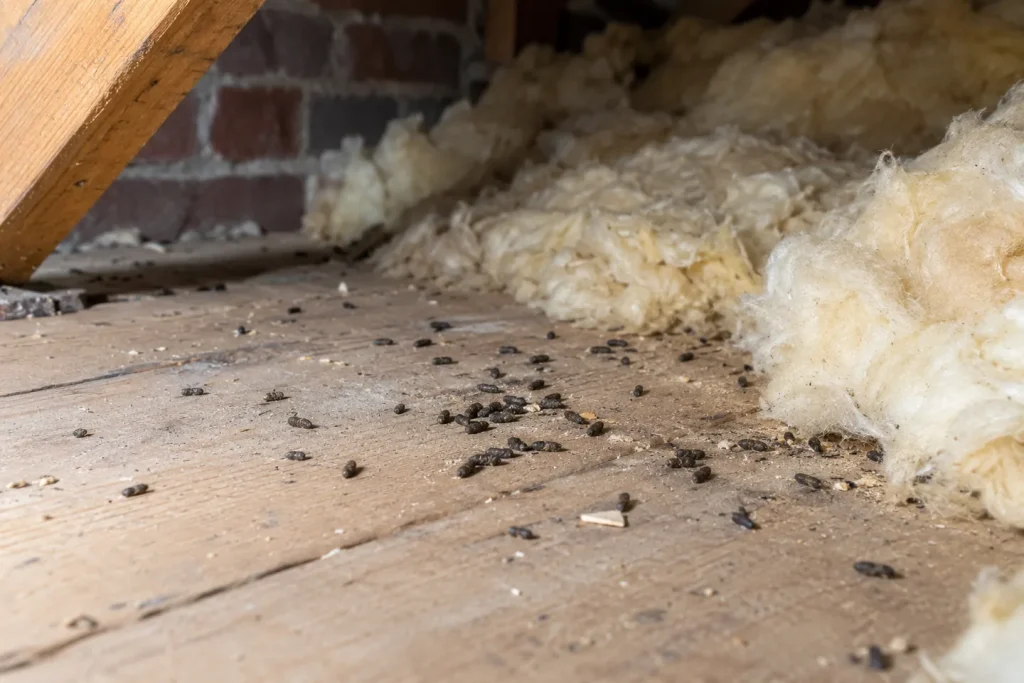
Droppings can indicate rodent activity, but size and shape are not always easy to judge from a photograph. Older material may remain after a previous problem. A fresh sighting in the loft, new droppings in a known clean spot and repeated movement together give a stronger case than one loose mark. If evidence is extensive, avoid sweeping or vacuuming it dry. Disturbing contaminated dust is unnecessary and can make a confined space worse.
The BPCA's mouse guidance describes signs including droppings and gnawing. Use it as a comparison, not a substitute for identification on site. If the material looks larger or is found along an external drain or ground-level run, a rat-control inspection may be more relevant. Keep the uncertainty in your notes.
Look at the route, not only the loft floor
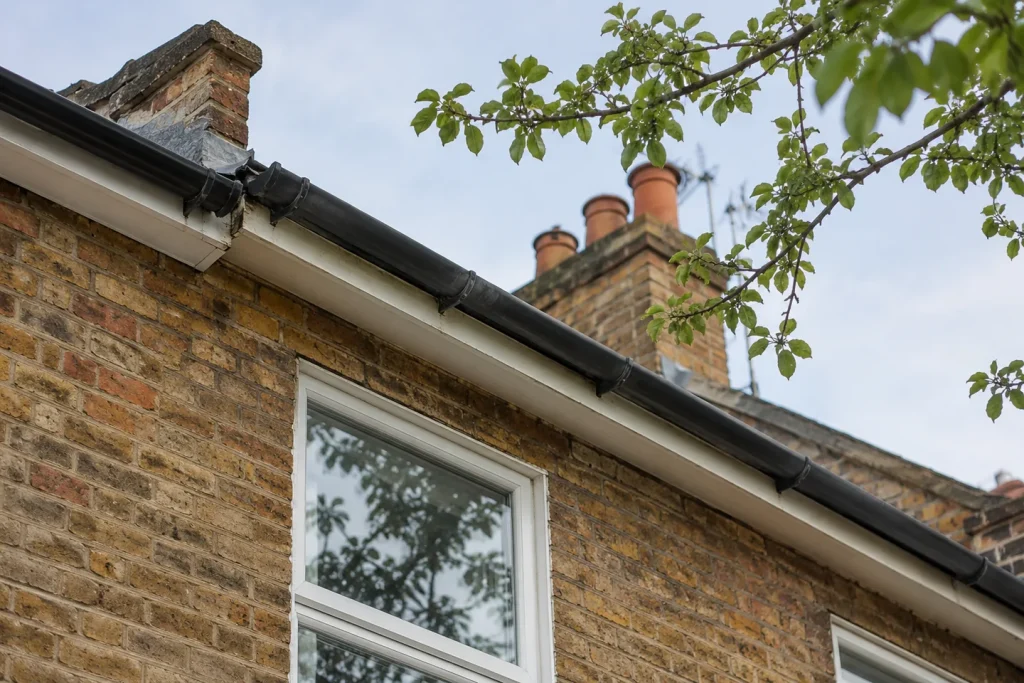
An animal seen or heard in a roof space had a route to get there. From the ground, you may be able to see a missing roof-edge fitting, a gap at a service entry or a branch close to the roof. Do not climb a ladder or lean out of an upstairs window to get a better photograph. Roofline inspection and repair belong to someone with safe access and the right equipment.
Even when mice are confirmed, the opening may be away from the loudest point. They can move through walls and service voids, so the kitchen, utility area and external building edge may also matter. An inspector may need to compare evidence across floors. The site's description of its inspection process explains why accessible routes, identification and limits of access are discussed before a treatment decision.
Stored belongings can hide the source
Lofts often contain boxes, spare textiles and seasonal decorations that are rarely moved. These can provide shelter or conceal damaged packaging. Check only what can be reached safely. If a box has gnaw marks or a strong smell, leave it in place for the assessment rather than carrying potentially contaminated contents through the house. Make a note of what is stored and whether any food, seed or pet supplies have been placed there.
After the source has been identified, storage can be improved with sound containers and clear access around inspection points. That work should follow a plan. Moving every box before the technician arrives may remove useful evidence or create an avoidable handling risk. Ask which areas need to be accessible for the agreed visit.
What not to do before identification
Do not scatter poison or place an improvised trap in the loft because of a noise. It may be unsafe around wiring, inaccessible voids, children, pets or wildlife, and the target may not be a mouse. Do not block a roof opening while activity is continuing or before the species and route are understood. A closure made too early can trap an animal or shift it into another part of the structure.
The HSE guidance on biocides says to consider whether a chemical product is needed, use only products suitable for the intended purpose and follow their labels. GOV.UK guidance also sets out legal and welfare limits for wildlife control. These are good reasons to let identification lead the decision.
Prepare a useful enquiry
When you call, say which room is below the noise, the times you have heard it and whether you have seen droppings or damage. Explain how the loft is accessed and whether it has a boarded route. Mention any previous control work, existing traps or products, and whether builders or roofers have recently worked on the property. If you have photographs, keep them available rather than trying to diagnose from an image alone.
Ask what can be inspected safely, whether an animal has been identified and which parts of the loft remain inaccessible. If a repair is recommended, clarify who should arrange it and when it should be done. The contact page asks for the postcode, affected rooms and access restrictions, all especially useful for a loft enquiry.
After an assessment, watch for a real change
Quiet nights are reassuring, but the follow-up should also consider new physical signs. Keep the original noise notes and record any later activity in the same way. If a repair was made, retain its location and date. If movement continues, report the change rather than assuming the first identification or treatment was wrong. There may be a second access point or an unrelated source of sound.
A sound above the ceiling is a reason to investigate, not a complete diagnosis. Safe observation, accurate notes and a careful look at accessible evidence will help distinguish a mouse problem from a different roof-space issue. The best next step is the one supported by what is found in your particular home.
Need help with a pest concern in Greenford?
Describe the signs you have noticed and where you found them. The team can discuss a suitable next step for your property.
Contact the team