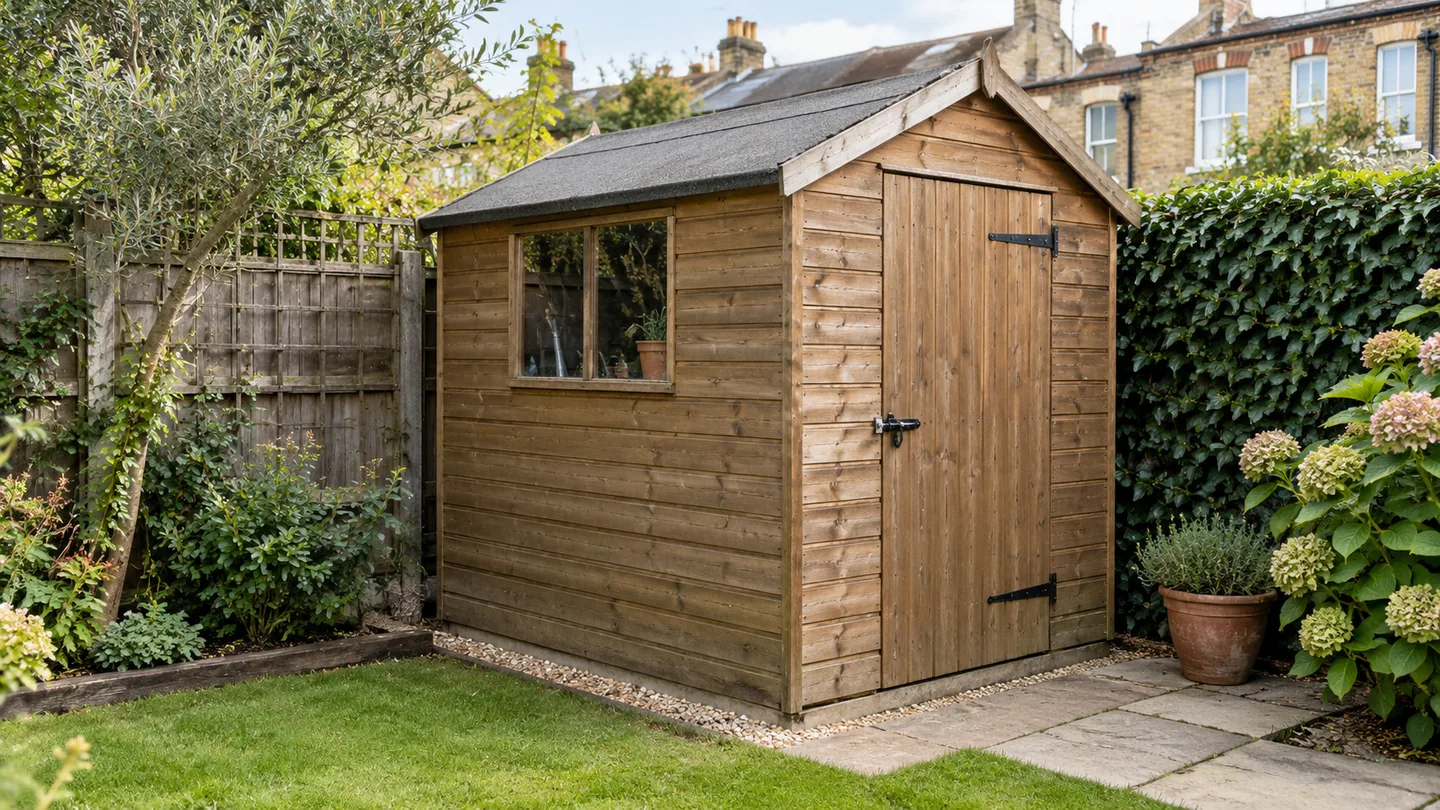
A shed offers the kind of cover that makes a garden sighting hard to interpret. An animal may run beneath it, nest there, or simply pass along its edge towards food elsewhere. The difference matters: filling a visible opening before you know what it connects to may leave the real cause untouched. A calm inspection of the shed, the ground around it and the route back to the house will give you a better basis for action.
Begin outside the structure
Walk around the shed in daylight, keeping a little distance from any hole. Look at each side from ground level. Is the ground worn into a narrow path, particularly along a fence? Is earth newly disturbed beneath the base? Are stored pots or timber hiding the corner? Photograph the whole side before taking a close view of any sign. A burrow-like opening, droppings, gnawing and rub marks can be useful evidence, but none should be interpreted without its setting.
Do not put your hand into an opening or lift a heavy structure to see what is underneath. A shed can have unstable supports, concealed sharp materials and contaminated spaces. If access is limited, note that limitation for an inspector. The question is not whether you can see every inch of ground; it is whether there is enough evidence to justify a closer professional assessment.
Compare old damage with fresh activity
Weathered holes and long-standing gaps may be unrelated to today's sighting. Fresh soil, newly chewed packaging, recent droppings or a repeated track are more informative. If you clean an accessible, uncontaminated area, check whether the sign reappears over the next few days. Do not disturb droppings by brushing them away dry. UK Health Security Agency guidance advises damp removal with gloves because sweeping or vacuuming rodent waste can make particles airborne.
Inspect the contents safely
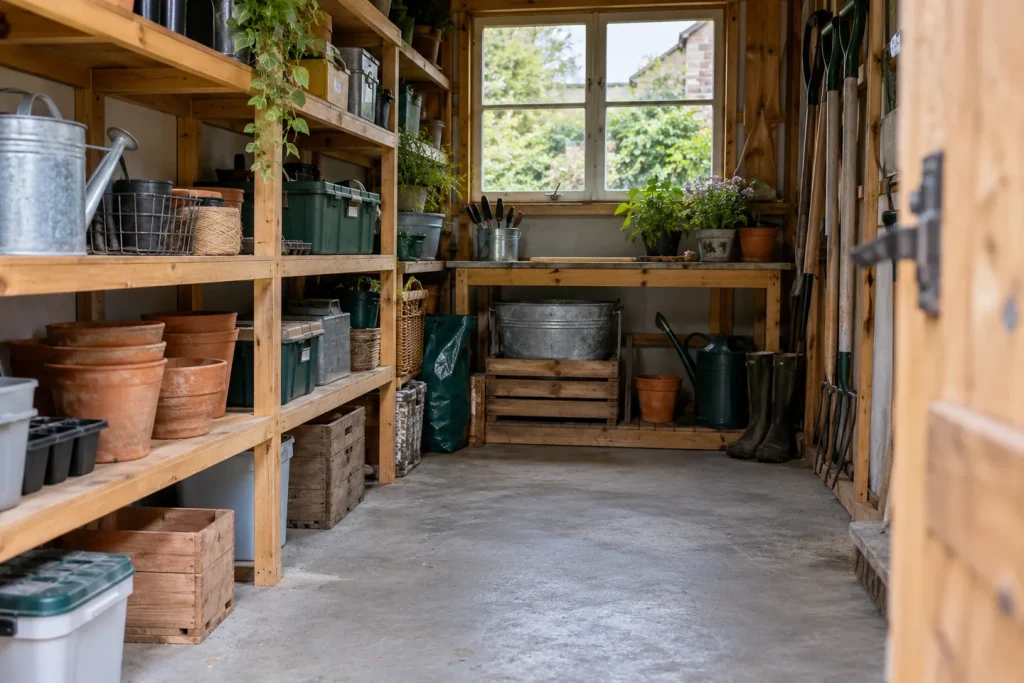
Open the shed door and pause before moving anything. Check from the threshold for movement, damaged bags and accessible food. Bird seed, pet food, bulbs and stored produce can draw animals to an otherwise quiet building. Look for tears in packaging and crumbs beneath shelves. Move food into rigid containers with well-fitting lids and discard any supplies that show signs of contamination. If there is extensive soiling, arrange suitable help rather than treating it as routine tidying.
Work in small sections when clearing ordinary clutter. Keep gloves on, avoid reaching blindly behind stacks and leave any suspected nest untouched. Old furniture, timber and cardboard can create cover against the wall and conceal entry points. Once safely moved, store useful materials off the floor and away from the perimeter so future inspections are possible. This makes the building less attractive and helps you see whether new activity is occurring.
If the shed has electricity, note any gnawing near visible cables but do not handle damaged wiring. Isolate the area and ask a qualified electrician to assess it. Pest control and electrical safety may need to be coordinated, because removing animals without repairing damage or entry routes leaves the building vulnerable. The rat control service in Greenford is relevant when signs support a rat problem; explain what was visible without opening wall or floor cavities yourself.
Check the base and door as routes
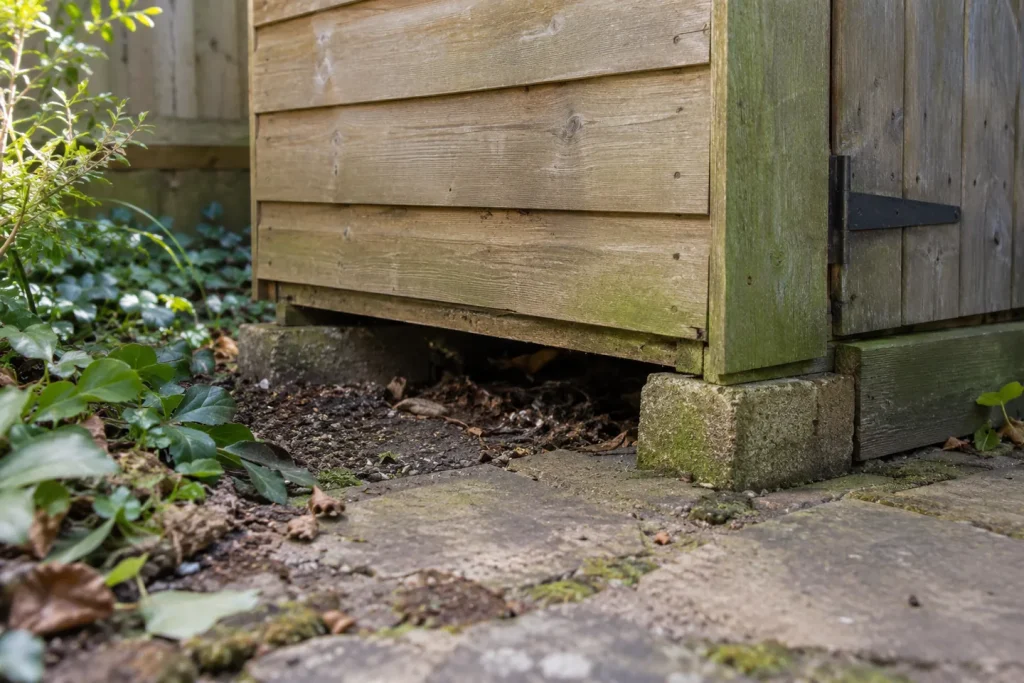
An outbuilding with a gap beneath the door or damaged lower boards can be easy to enter. Check hinges, corners and vents, then look at the ground immediately outside. The aim is to map routes, not to seal everything during the first visit. If an animal is still inside, closing an exit can create a more difficult problem. A professional can advise which repairs should follow control and which can be made immediately.
A shed base may sit over soil, concrete or paving, and each arrangement creates different inspection limits. Soil disturbed beside the edge may suggest digging; a void beneath raised timber may offer shelter without a visible hole. Do not assume an animal lives under every raised shed. If you repeatedly see movement under one corner, record its time and direction. That pattern is more useful than a single photograph of the shed itself.
Maidstone and Oxford councils advise checking and repairing holes in sheds and buildings as part of prevention. They also emphasise controlling food and garden shelter. Proofing works best when those related conditions are dealt with, since an attractive food source can encourage attempts at another opening.
Trace the route back to the house
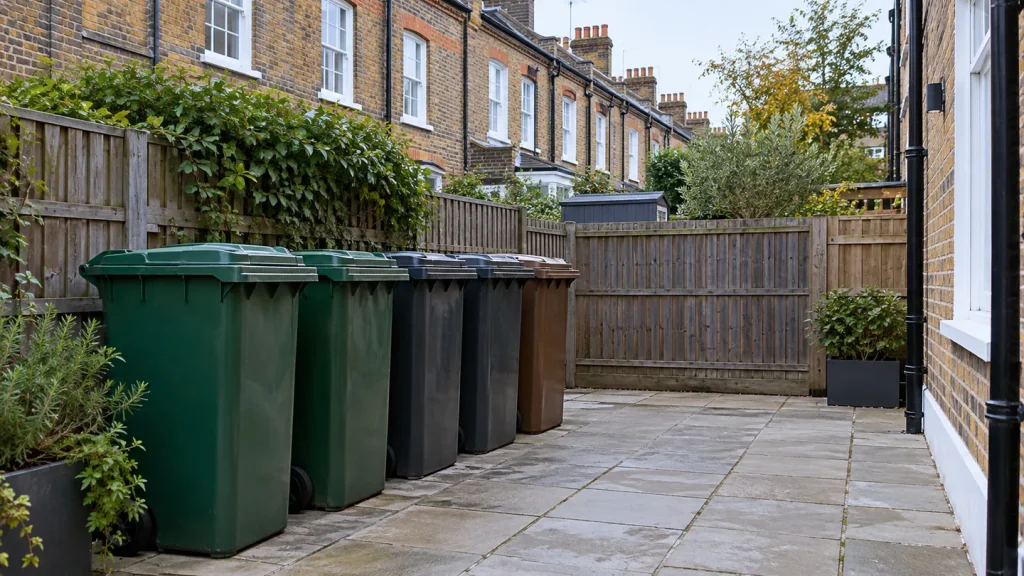
The distance between the shed and the home can be short in a Greenford garden. Look for a continuous sheltered route along fencing, dense plants, decking or stored materials. Check the house wall for gaps around pipes, air bricks and doors. Photograph any defects rather than reaching into them. A rat near a shed may also be using an outdoor route to an indoor food source, so inspect nearby kitchens or utility areas for droppings and gnawed packaging.
If you are unsure whether the animal was a rat, look for multiple clues rather than guessing from a fast glimpse. A mouse can use a shed too, and the scale of evidence changes the response. The site's mouse control page may help frame that discussion. If the movement is chiefly high around the roof or during daytime, squirrel control information may be more relevant. Do not decide species from the shed location alone.
Check surrounding attractants
The shed may provide shelter while food comes from somewhere else. Examine bins, compost, fallen fruit, pet bowls and bird feeding. Closed lids and clean ground remove easy rewards. Reading Borough Council advises keeping garden waste and timber from building into nesting cover and managing food sources, including compost and bird feed. These measures are useful even before the exact route is established.
If there is a drain or inspection cover near the shed, look for visible damage from a safe position. A drainage problem is one possible source of persistent activity, not an automatic explanation. Do not open a chamber to investigate. A drainage specialist is appropriate when an actual defect or repeated sign near the drainage system gives a reason to look further.
In a shared or rented garden
An outbuilding may belong to a landlord, neighbour or managing agent. Report your observations and photographs to the person responsible for repairs. Be precise about which side of the structure is affected and whether stored goods or the house show signs. Avoid moving another person's belongings or modifying a shared structure without permission. Coordinated access may be needed to inspect both sides of a fence or the base of a communal store.
Decide what needs professional attention
Repeated sightings at the same opening, fresh burrowing, indoor signs or gnawed stored goods justify an inspection. Ask the professional to explain whether the shed is a harbourage, a transit route or simply the point where you noticed an animal. The answer should shape treatment and repair order. Scattering rodenticide around the shed is not a substitute for that assessment and can put pets and wildlife at risk.
After any work, continue to check the same marked locations. New tracks, soil movement or damaged packaging are more meaningful than a quiet evening. A short follow-up record shows whether access and attractants have really been addressed. If you need to discuss the evidence, use the site's contact page and share the photographs showing the shed's position as well as the close details.
The practical question is not simply “Are there rats under my shed?” It is “What evidence is fresh, what makes this place useful to them, and is there a route into the home?” Answering those questions in order gives repairs and treatment a much better chance of lasting.
Need help with a pest concern in Greenford?
Describe the signs you have noticed and where you found them. The team can discuss a suitable next step for your property.
Contact the team