
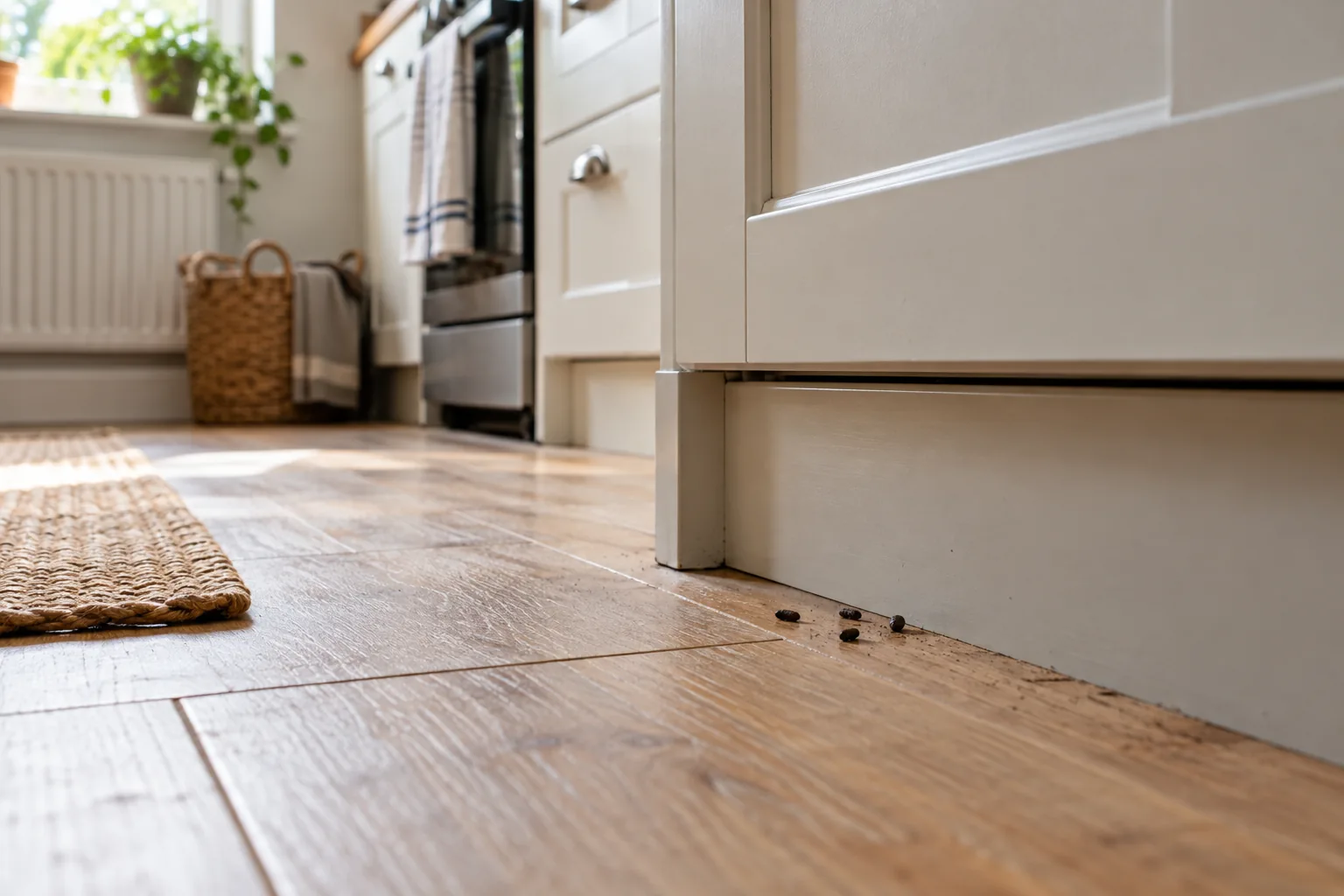
Finding small, dark droppings beside the toaster is an unpleasant way to start the day. The first instinct may be to wipe everything away, but a few minutes spent noting exactly where the marks are can help you find the route a mouse is taking. It also helps you distinguish a single uncertain sighting from an active problem. In a kitchen, the immediate priorities are straightforward: keep food and people away from possible contamination, clean safely, and look for further evidence without pulling the room apart.
This guide is for a household kitchen in Greenford. If you manage a café or other food business, follow your food safety procedures and seek prompt specialist advice; the responsibilities for a commercial food area are different. At home, avoid guessing how many mice are present from one cluster of droppings. One sighting tells you where to start checking, not how far the activity extends.
First, make the area safe
Keep children and pets away from the affected surface while you assess it. Set aside any uncovered food nearby, and check packets for holes, tears or staining. Food that has been gnawed or may have come into contact with droppings or urine should be discarded. The same goes for an open loaf or bowl of fruit immediately beside obvious contamination. A sealed tin or intact glass jar is a different matter: clean its exterior before returning it to storage.
Do not sweep dry droppings into a dustpan or vacuum them. UK government guidance on rodent waste advises against both because they can put contaminated material into the air. Put on household gloves and, ideally, a suitable mask. Use a damp kitchen towel or wet wipe to lift the material, bag it, and put it in the rubbish. Clean and disinfect the affected surface according to the product label, then let it dry. Wash your hands thoroughly with soap and water after removing gloves. Do not mix cleaning products or apply pest-control chemicals to food preparation surfaces.
If the droppings are inside a cupboard, remove the contents carefully so you can see the shelf and its corners. Wash crockery before use if it was stored where a mouse may have travelled. Take a photograph before cleaning if it is safe to do so; the position of the droppings can be useful when you discuss mouse control in Greenford with a professional.
Are they likely to be mouse droppings?
Mouse droppings are usually small, dark and roughly rice shaped. They may be scattered rather than gathered in one pile. Their appearance alone is not a perfect identification method: other material can look similar at a glance, and size varies. Look for a pattern of signs before deciding what is in the kitchen. Scratching after dark, a hole in a food packet, faint dirty marks along a wall, or shredded paper tucked behind a cupboard all strengthen the case for mouse activity.
Larger droppings, more substantial gnaw marks or activity around an outside drain may call for a different assessment. Do not assume that every rodent sign is caused by a mouse. If the evidence seems larger than expected, our rat control service in Greenford is the more relevant starting point. A clear photograph with a coin or ruler nearby for scale can help an expert assess it without anyone handling the material.
Check the places a mouse would actually use
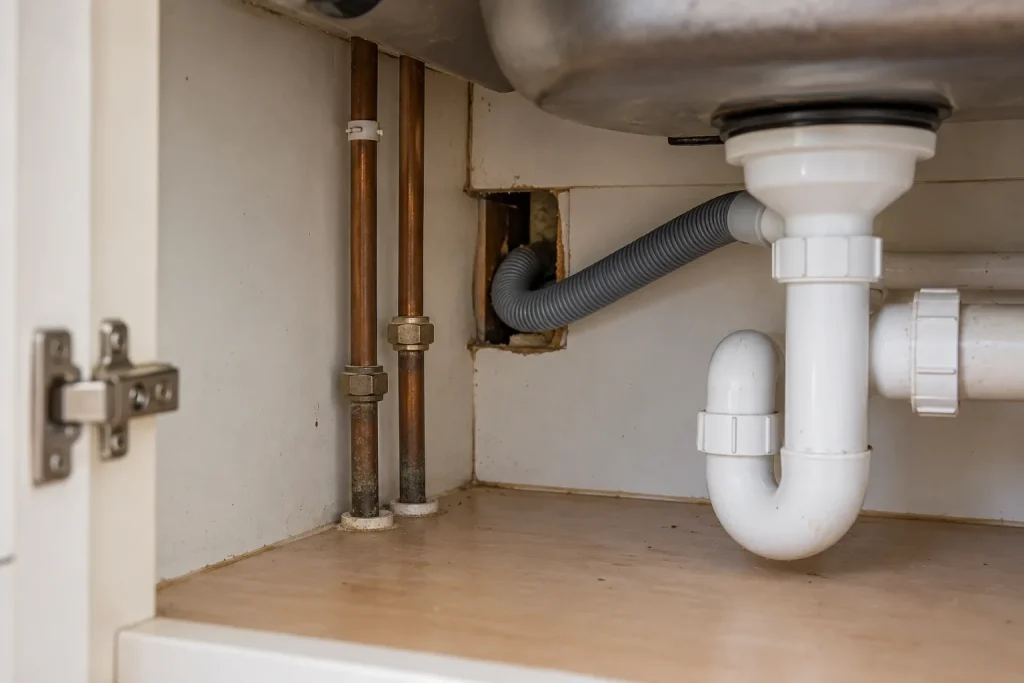
Start with the spot where you found the droppings. Check the rear corners of the worktop, the joint between worktop and wall, and the cupboard directly below. Then inspect accessible spaces beneath the sink, around pipe entries, and behind movable items such as the bin. Mice often use sheltered edges, so a clean open floor is less informative than the narrow gap beside a cabinet plinth.
Look without forcing appliances out or reaching behind live electrical equipment. A torch can reveal crumbs, damaged packaging, nesting material or more droppings in a dark cupboard. Photograph anything useful, then clean the surface safely. If you notice a chewed cable, stop using the affected appliance or circuit and arrange appropriate electrical advice. Pest treatment and electrical repair address different parts of that problem.
Move on to food storage. Inspect packets of cereal, rice, pasta, flour, biscuits and pet food, including those that have been pushed to the back. A tiny opening in a paper or thin plastic bag may be easier to see from below. Check whether the bin closes properly and whether food waste or crumbs collect behind it. If a pet is fed in the kitchen, look at the feeding area after the bowl is removed for the night.
Finally, consider routes into the room. Visible gaps around service pipes, damaged skirting or a poorly fitting external door deserve attention. A mouse can pass through a surprisingly small opening. You do not need to dismantle units to make the first assessment, and you should never block a ventilation grille. If activity is continuing, a pest professional can help identify entry points and explain which repairs are suitable once the infestation is being dealt with.
Reduce the attractions tonight

You can make the kitchen less useful to a mouse before any treatment begins. Put dry goods and pet food into rigid, close-fitting containers. Clear crumbs from worktops, the floor edges and the space beneath movable equipment. Wipe up spills, wash dishes and leave the sink area as dry as practical. Tie up food waste and use a bin with a properly closing lid. These steps do not prove the mouse has gone; they remove easy food and help new signs stand out.
Some householders rush to seal every gap on the first evening. Proofing is important, but closing an active route without understanding where animals are moving can leave them trapped in an inaccessible space. Record the gap and discuss the order of treatment and repairs with a professional. Any repair around ventilation, gas or electrical services must preserve the safe function of those services.
When to ask for professional help
Arrange an assessment promptly if droppings return after cleaning, you find signs in several cupboards, you hear activity in a wall or ceiling, or you cannot reach the suspected entry route safely. The same applies if there is damaged wiring, persistent contamination around food, or a vulnerable person in the household for whom a prolonged problem would be especially difficult. A professional visit can establish the likely species, where it is travelling, and a suitable treatment and proofing plan.
Do not put loose poison in a kitchen or experiment with several products at once. Treatment choices must account for children, pets, food and the layout of the property. Ask the technician what areas need to be accessible, what precautions you should follow and how progress will be checked. If you have already placed a product, tell them where and what it is. Clear information makes the visit safer and more effective.
If the sound is mainly in the loft during the day rather than around the kitchen after dark, the cause may be different; the squirrel control page for Greenford explains that service. If you are uncertain whether the signs point to mice or another pest, contact the team with your photographs and a short activity log. You can also review the Greenford mouse treatment page before you call.
A practical 24-hour checklist
Before the next meal, isolate and safely clean the affected area, discard food that may be contaminated, and wash exposed crockery. Check the closest cupboards and accessible pipe gaps with a torch. Store vulnerable food in rigid containers, remove overnight food sources and close the bin. Note any noises or new signs, including their time and exact location. If evidence appears again, arrange a professional assessment rather than waiting for the problem to become obvious in several rooms.
The aim is to turn a worrying discovery into a clear sequence of decisions. You do not need to identify every opening or decide on a treatment in one evening. Safe cleaning, careful observation and prompt help when activity continues will put you in a much stronger position.
Need help with a pest concern in Greenford?
Describe the signs you have noticed and where you found them. The team can discuss a suitable next step for your property.
Contact the team