

The word 'moth' can describe two very different household problems. One begins in dry food and may reveal itself as webbing in a cereal packet. The other centres on natural-fibre textiles and may first show up as a hole in a wool jumper. Seeing a flying insect does not, by itself, tell you which problem you have. The quickest route to a useful answer is to work from the place where evidence appears, rather than trying to identify a fast-moving adult in mid-air.
The British Pest Control Association describes both clothes moth damage and stored-product moth signs. UK council guidance also distinguishes moths associated with textiles from those found in dried foods. This guide helps you inspect both areas without mixing their contents or treating the wrong cupboard. If activity persists, the Greenford moth control service can help identify the species and locate its source.
Follow the evidence, not the moth's flight path
An adult moth may be seen away from the material where its larvae feed. A kitchen light attracts attention, but it is not a reliable map of the infestation. Begin by noting where you first saw the insect and where you have found larvae, webbing, damaged food or fabric holes. Take a clear photograph if possible. A specimen in a small container is even more useful for identification than a blurry image of a moth on the ceiling.
Ask a simple first question: is there physical evidence in food or in fabric? Pantry moth larvae can affect cereals, nuts, dried fruit, flour and dry pet food. Clothes moth larvae can damage wool, cashmere, silk, carpets and upholstered natural fibres. The feeding larvae matter more than the adult flight. If evidence appears in both kitchen and wardrobe, do not assume a single species is responsible; inspect each source separately.
Avoid spraying the first cupboard you see. A product intended for a room surface does not belong on food or clothing, and a spray cannot replace finding contaminated material. Source identification is the step that determines what needs to be removed, cleaned or professionally treated.
A pantry inspection that saves time
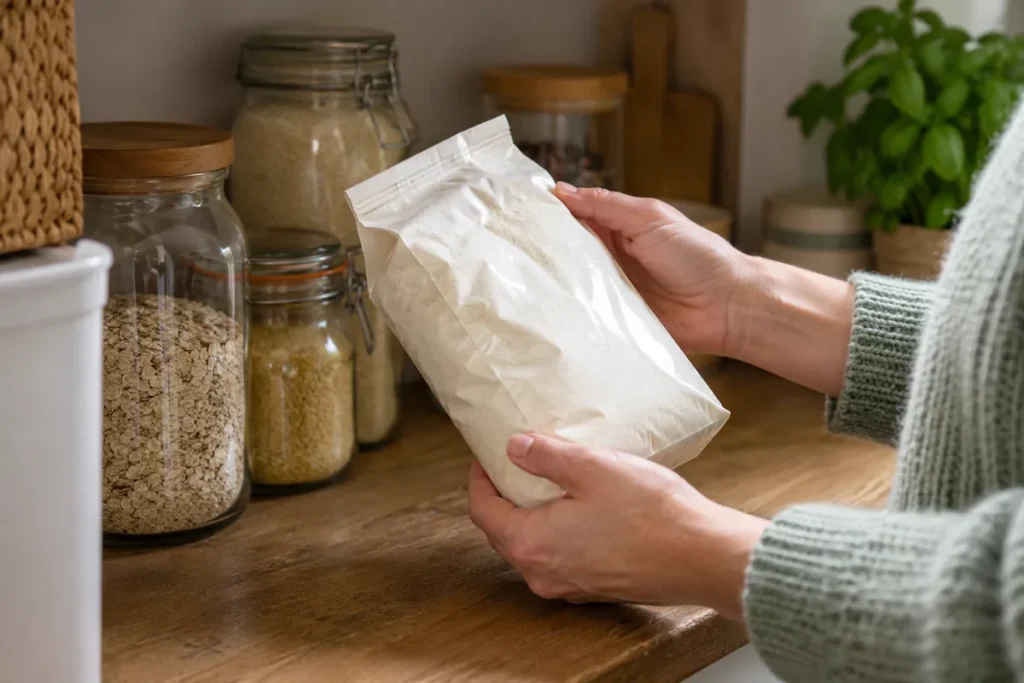
Take dry goods from one shelf at a time and check the packets before opening them. Look for small holes, webbing, clumped grains, larvae or unusual debris in the folds of packaging. Include pet food, bird seed and rarely used baking ingredients. A sealed, intact tin is less likely to be the source than an old paper bag tucked at the back, but inspect the shelf around every item.
If a packet is clearly affected, close it in a bag and dispose of it in a covered bin. Do not pour suspect cereal into a new container to 'save' the clean-looking portion; contamination may be less visible than the webbing you can see. Check nearby packets, including unopened ones made of thin cardboard or plastic. Return sound food only after the shelf has been cleaned and dried.
Vacuum crumbs from corners, shelf joins and the area below the cupboard, then empty the vacuum outside. Wipe the surfaces and let them dry. Put vulnerable dry foods in rigid, tightly closed containers. That makes future inspection easier as well as limiting access. If a recently purchased product seems to be the source, the BPCA suggests informing the retailer so it can investigate its supply chain. Record the product and batch details before disposing of affected material.
If you instead find gnawed packaging or rodent droppings, the issue is different. The Greenford mouse control service is relevant to that evidence. Do not attribute every damaged packet to a moth just because a small insect was also in the room.
A wardrobe inspection with different priorities
Start with garments that have been stored longest, particularly wool, cashmere and other animal-based fibres. Look beneath collars, cuffs and folds, and at seams that stay dark in a crowded wardrobe. Check for holes, pale larvae, silken threads or small portable cases. Then inspect the wardrobe's corners, drawers, floor and the carpet beneath nearby furniture. The source might be a rug or stored blanket rather than a hanging coat.
Take items out one at a time. Keep checked clothes separate from unchecked ones and avoid spreading them across another bedroom. Vacuum the wardrobe and the surrounding floor edges. Process affected clothes according to their care labels; a high wash can ruin wool, so do not follow a food-cupboard cleaning routine for delicate textiles. Ask a specialist cleaner or pest professional about valuable pieces. Store cleaned, dry garments in close-fitting bags or containers for longer periods.
Hairy larvae and shed skins in a carpet may suggest carpet beetles rather than moths. North Northamptonshire Council explains this distinction in its textile pest advice. If that is what you find, the Greenford carpet beetle treatment page is the appropriate comparison. A photograph with a scale can prevent an unnecessary moth treatment.
Why the distinction changes the response

The first corrective step for a pantry source is removing affected food and cleaning shelves. The first step for a clothes moth source is identifying at-risk textiles and cleaning the hiding places around them. Both benefit from good storage, but the belongings and cleaning methods differ. A trap that catches adults may help monitor a known species, yet it will not remove larvae from a packet or a folded jumper.
Stored-product moths can arrive in purchased dry goods, so an impeccably clean kitchen can still have an affected packet. Clothes moths may develop in undisturbed natural fibres even if the visible wardrobe is tidy. Avoid treating either as a sign of poor housekeeping. Instead, find the material that supports the larvae and change the conditions that allowed it to remain unnoticed.
If you use a monitoring trap, choose one appropriate to the identified species and follow its instructions. Do not take a zero catch as proof that every item is clear. Conversely, one adult in a trap does not establish extensive damage. Inspect the actual food or fabric and use the trap as one piece of evidence.
Keep a dated note for a few weeks after the clean-up. In the pantry, record which shelf produces any new larva or webbing and which products were purchased recently. In the wardrobe, record the precise garment or carpet edge where new damage appears. A short, location-based record tells you whether the same source was missed or whether a separate area needs inspection. It is more informative than counting moths without knowing where they came from.
When the source is hard to find
Seek professional help if larvae or adults keep appearing after a thorough check, several rooms are involved, or damage is occurring in fitted carpets and furniture you cannot move. Tell the technician whether signs first appeared in the kitchen or wardrobe and what you have already discarded or cleaned. Show photographs of larvae, webbing, cases and damage rather than only the adult moth. That record helps narrow the survey.
For a food business, follow its food safety procedures and obtain prompt specialist advice; a domestic pantry checklist is not enough. For a household, keep food separate from treatment areas and do not use unlabelled or unsuitable chemicals. Ask the professional how any proposed treatment interacts with food storage, pets and delicate fabrics, and what follow-up is needed.
The useful question is not simply 'How do I get rid of moths?' It is 'What are the larvae feeding on, and where?' Once you answer that, the response becomes much more focused. The Greenford moth control page provides a route to an assessment when your kitchen or wardrobe search does not reveal the full source.
Need help with a pest concern in Greenford?
Describe the signs you have noticed and where you found them. The team can discuss a suitable next step for your property.
Contact the team